DIY Chimney Cleaning: Can You Sweep Your Own Chimney Safely?
DIY chimney cleaning is possible, but only for a small group of chimneys: a straight, lined flue with thin, dry soot that you can brush from inside the house. Glazed creosote, cracked flue tiles, steep roofs and stoves with bends are jobs for a trained sweep, and many older Annapolis homes fall into that group.
This guide covers the three checks to make before you buy a brush, what Maryland law says, and how a careful home sweep compares with professional chimney cleaning in Annapolis. Not sure your chimney is due yet? Start with these warning signs your chimney needs cleaning.
Can You Clean Your Chimney Yourself? The Short Answer
Yes, when all three of these are true. If even one is false, book a sweep instead.
- The flue is straight, lined and sound. No cracked tiles, no missing liner and no bends.
- The buildup is thin, dry and flaky. Tarry or shiny deposits will not come off with a brush.
- You can do the whole job from inside. No climbing on a high, steep or slate roof.

| Your chimney | Sweep it yourself? | Why |
|---|---|---|
| Straight masonry flue, intact liner, light flaky soot | Often yes | A rod and a brush sized to the flue remove first stage soot |
| Tarry, sticky or shiny black coating | No | Second and third stage creosote need rotary tools or a chemical treatment |
| Cracked, missing or unknown liner | No | Brushing can knock loose broken tile, and you need a camera to see the damage |
| Wood stove or insert with bends or a connector pipe | Usually no | Bends trap brushes, and the stove may need to come out first |
| Factory built fireplace with a metal flue | Check the manual | The wrong brush can scratch a metal flue, so follow the maker’s cleaning rules |
| After a chimney fire, a storm or an animal nest | No | The CSIA calls for a Level 2 inspection after a chimney fire |
| Tall, steep or slate roof | No | Roof work is the riskiest part of any chimney job |
Is It Legal to Sweep Your Own Chimney in Maryland?
Yes. Maryland does not license chimney sweeps. The Maryland Home Improvement Commission FAQ says cleaning chimneys is not considered home improvement, so you can sweep your own flue without a permit or license.
Repairs are a different matter. The same FAQ says building or reinforcing a chimney, or installing a chimney cap, counts as home improvement work. If a sweep turns up a cracked crown or a rusted cap, the person who fixes it needs an MHIC license. Ask for that number before any repair starts.
How Do You Check the Buildup Before You Sweep?
The Chimney Safety Institute of America says a masonry fireplace should be swept at 1/8 inch of sooty buildup, or sooner if glaze is present. Factory built fireplaces should be swept when any noticeable buildup appears.
To check, open the damper, shine a bright flashlight up the flue and look at the walls. Gently scrape a small spot on the smoke shelf or the lower flue with a putty knife and look at how thick the layer is and how it comes off.

What Does Each Stage of Creosote Look Like?
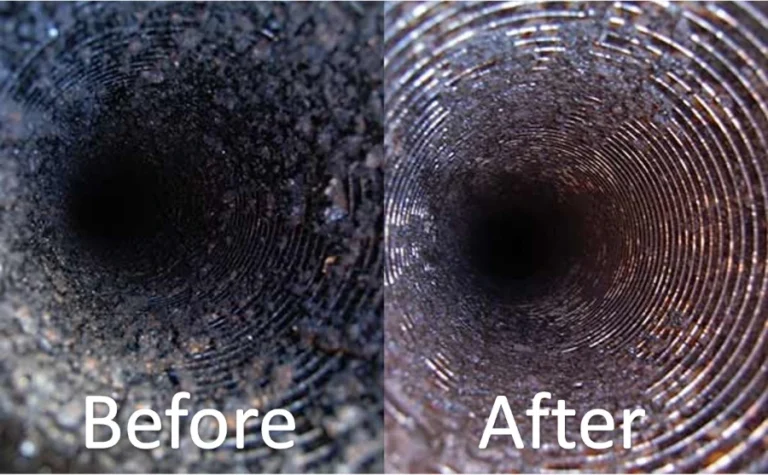
- Stage one: dry, flaky, dark soot that falls off easily. A brush removes it.
- Stage two: crunchy, tar like flakes that stick to the flue. A hand brush leaves much of it behind.
- Stage three: a hard, shiny glaze that looks like dried tar. Brushes slide over it, and it burns hot if it catches.
The CSIA notes that all forms often show up in the same chimney, and that every form of creosote is highly combustible. Our guide to the three stages of creosote explains why the last stage is the most dangerous.
How Does a Safe DIY Sweep Work, Step by Step?
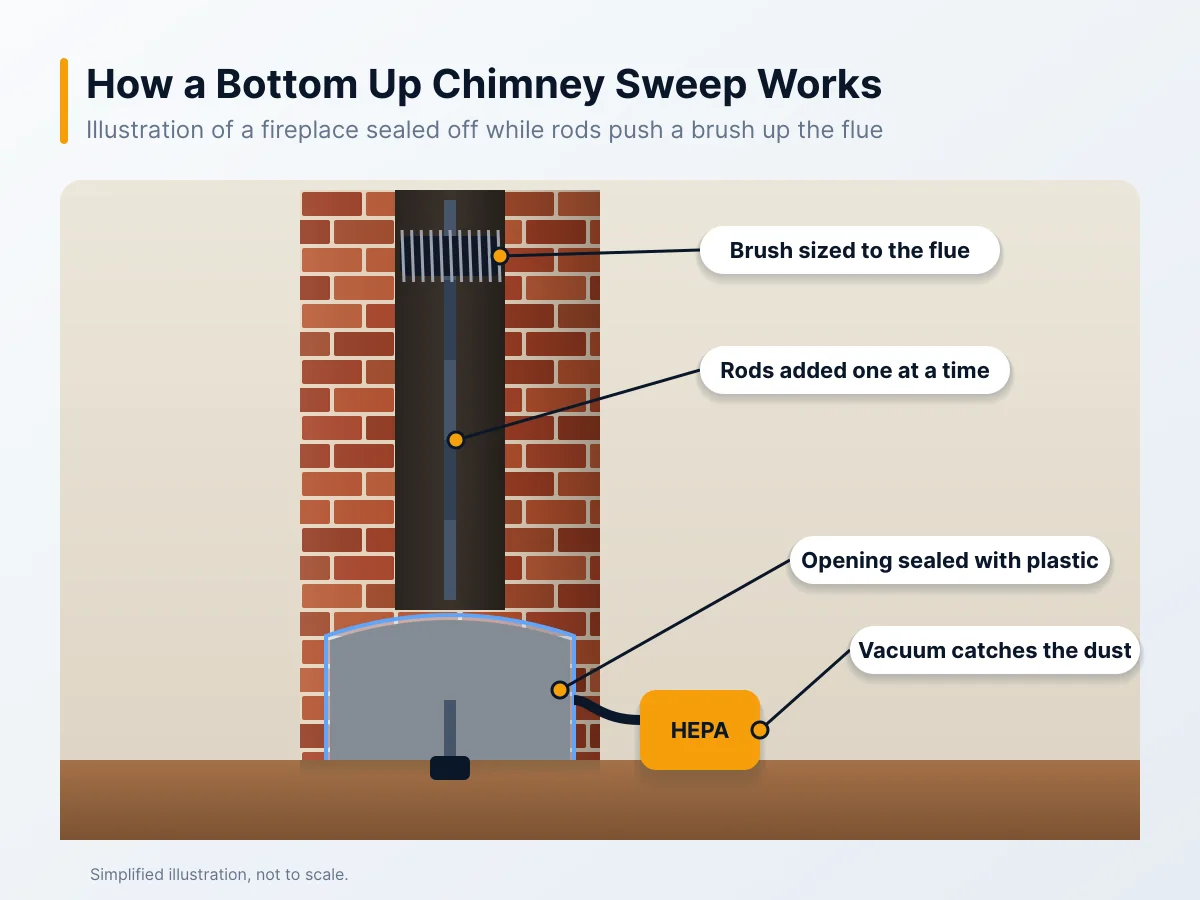
If your chimney passed all three checks, the bottom up method below keeps you off the roof. Plan for a full morning the first time, and stop at any step that does not look right.
What Tools Do You Need?
- A chimney brush that matches the size and shape of your flue
- Flexible rods long enough to reach the top of the chimney
- Drop cloths, plastic sheeting and painter’s tape
- An N95 mask or better, safety glasses and work gloves
- A bright flashlight and a small hand brush for the smoke shelf
- A shop vacuum with a HEPA filter
Measure twice before you buy. A brush that is too small leaves soot on the walls, and one that is too large can jam halfway up the flue. Lay out every tool before you start, so you never have to leave the fireplace open halfway through the job.
- Let the fireplace go cold. Wait at least 24 hours after the last fire so no embers are left.
- Measure the flue. Buy a brush that matches the size and shape of the flue. Use a poly brush for a metal liner and a wire brush for clay tile, unless the manual says otherwise.
- Protect the room. Lay drop cloths in front of the hearth and seal the fireplace opening with plastic sheeting and tape, leaving a small slit for the rods.
- Protect yourself. Wear an N95 mask or better and safety glasses. Soot is fine and gets everywhere.
- Brush from the bottom up. Push the brush through the damper and add rods one at a time, scrubbing with short up and down strokes until you reach the top.
- Clean up the soot. Wait for the dust to settle, then vacuum the smoke shelf and firebox with a shop vacuum fitted with a HEPA filter. A regular household vacuum will blow fine soot back into the room.
- Look again. Shine the flashlight up the flue. If you still see shiny patches, cracks or gaps between tiles, stop and call a professional.
DIY vs Professional Chimney Sweep: Side by Side
| DIY sweep | Professional sweep | |
|---|---|---|
| What it removes | Light, dry soot | Soot plus second and third stage creosote |
| Inspection | What you can see with a flashlight | A visual inspection with each sweep, plus a camera scan when needed |
| Roof check | Usually skipped | Crown, cap and flashing checked for water damage |
| Tools | Brush, rods, mask, plastic and a shop vacuum | Rotary tools, HEPA vacuums, a flue camera and roof safety gear |
| Records | None | A written report with photos, useful for insurance and home sales |
| Cost | Tools you buy once | One visit, priced before any work starts |
A home sweep can keep a healthy flue clean between visits, but it does not replace the yearly check. The national chimney standard, NFPA 211, says chimneys, fireplaces and vents should be inspected at least once a year. A chimney inspection looks for the damage a brush and a flashlight will miss.
Why Are Many Annapolis Chimneys Hard to Clean Yourself?
Older brick chimneys. Many homes in the Historic District and around Eastport and Murray Hill have brick chimneys built long before modern liners. Some have no liner at all, and others have old clay tiles with cracks or gaps that a brush can make worse.
Tall, steep roofs. Three story row homes near City Dock and steep slate roofs downtown make roof access dangerous without proper gear. Even the bottom up method leaves the top of the chimney unchecked.
Bay humidity. Damp air off the Chesapeake Bay and the Severn River keeps flues moist for much of the year. Moisture mixed with creosote is a common cause of the campfire smell many homeowners notice on humid summer days.
Birds in the flue. If you hear chirping between spring and fall, you may have chimney swifts. They are protected under the Migratory Bird Treaty Act, so do not sweep or block a chimney with an active nest. Wait until the birds leave in the fall.
When Is the Best Time of Year to Sweep?
Late spring, right after the last fire of the season, is the best time in Annapolis. Soot and creosote left in a damp flue over a humid summer turn acidic, which wears on mortar and metal liners and makes the room smell like an old campfire. A spring sweep also leaves your chimney ready for the first cold night in the fall.
If you burn wood several times a week, check the flue again in the middle of winter. Heavy use can build up 1/8 inch of soot in a single season, and fall is when sweeps are busiest, so booking early saves a long wait.
What Can Go Wrong When You Do It Yourself?
- Falls. The Consumer Product Safety Commission estimates about 227,000 emergency room visits in 2020 linked to ladders and stools. Getting onto a roof is the most dangerous part of chimney work.
- Fire risk left behind. NFPA data shared by Portland Fire and Rescue found that failure to clean was the leading factor in home heating fires, at 25 percent. A partial clean that leaves glaze behind leaves that risk in place.
- Hidden damage. Cracked tiles and gaps can let heat and gases reach the walls of your home. The CDC warns that carbon monoxide has no color and no smell, so keep CO alarms on every level.
- A messy room. Soot is fine enough to drift through a gap in the plastic and stain carpet, curtains and furniture.
Frequently Asked Questions
Is it safe to sweep your own chimney?
It can be, but only for a straight, lined flue with light, dry soot, with all of the work done from inside the house. Glazed creosote, cracked tiles, bends and roof work are safer left to a trained sweep.
How often should a chimney be swept?
NFPA 211 calls for an inspection every year. The CSIA says a masonry chimney should be swept once sooty buildup reaches 1/8 inch, or sooner if glaze is present. Our guide on how often to clean your chimney in Annapolis covers this in more detail.
Do I need a license to clean chimneys in Maryland?
No. The Maryland Home Improvement Commission says cleaning chimneys is not home improvement. Repairs such as rebuilding a chimney or installing a cap do need an MHIC licensed contractor.
Can you clean a chimney from the bottom?
Yes. The bottom up method pushes a brush on rods up through the damper, which keeps you off the roof. The drawback is that you cannot check the crown, cap or flashing from below.
The Bottom Line
DIY chimney cleaning makes sense only when the flue is straight, lined and lightly sooted, and the whole job stays inside the house. For glazed creosote, older brick chimneys, stoves, steep roofs or any sign of damage, a trained sweep with a camera is the safer choice.
Not sure which group your chimney falls into? Call Annapolis Chimney Pros at (667) 301-7778 or request a visit online. We sweep the flue, run a camera through it and show you the photos before we recommend any repair.
Sources: Chimney Safety Institute of America FAQs and inspection levels, Maryland Home Improvement Commission FAQ, CPSC injury estimates for 2020, NFPA data as published by Portland Fire and Rescue, and the CDC on carbon monoxide.