The 3 Stages of Creosote and Why the Last One Is Dangerous
Every time you burn wood, smoke leaves behind a residue called creosote inside your flue. It does not stay the same. It builds in three stages, and each one is harder to remove and more dangerous than the last. Knowing which stage you are dealing with helps you understand why a yearly cleaning matters so much here in Annapolis.
Stage one: light and flaky
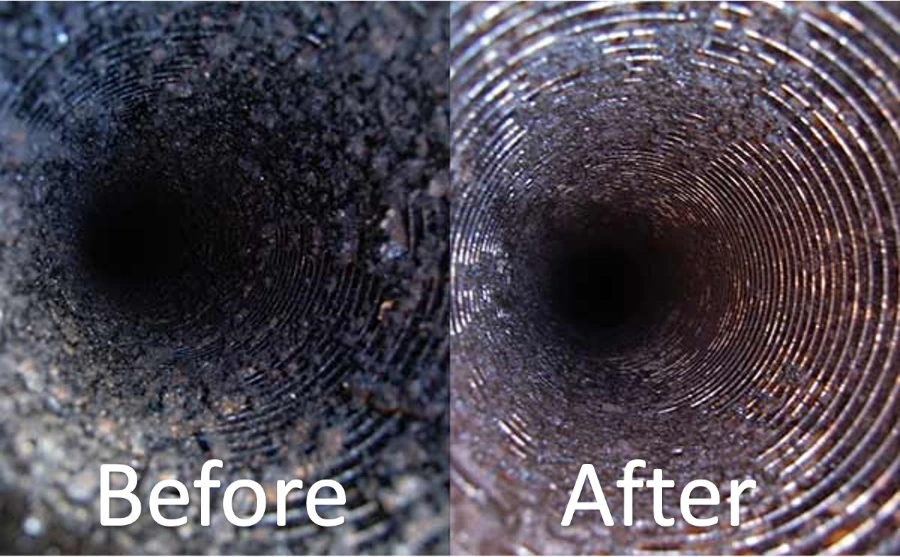
In the first stage, creosote looks like a thin, dusty layer of black or brown soot. It is soft, powdery, and brushes off easily. A standard cleaning removes it with no trouble. Most chimneys that get cleaned every year never move past this stage, which is exactly the point.
Stage two: tarry and sticky
If soot is left to build, it hardens into a sticky, tar like layer. This stage clings to the flue walls and does not brush away cleanly. It takes stronger tools and more time to remove. You often reach this stage when a chimney is skipped for a season or two, or when green, unseasoned wood is burned.
Stage three: hard, shiny glaze
The final stage is a hard, glassy glaze baked onto the flue. It is stubborn, and it is highly flammable. Ordinary brushing will not touch it. Removing glazed creosote takes special tools and, in heavy cases, professional treatment. This is the stage most likely to fuel a serious chimney fire.
Why the last stage is so dangerous
Glazed creosote is basically fuel lining your chimney. A stray spark and enough heat can ignite it, and a chimney fire can burn well past 2,000 degrees, hot enough to crack the liner and reach the wood framing of your home. The U.S. Fire Administration reports that thousands of home fires start in chimneys and fireplaces every year.
How to slow creosote down
You cannot stop creosote completely, but you can slow it. Burn well seasoned hardwood such as oak, maple, or hickory that has dried for at least six months. Dry wood burns hotter and cleaner, which means less smoke and less buildup. Keep good airflow, and never smother a fire down overnight with the damper nearly closed.
The simplest protection
A yearly cleaning keeps you in stage one, where removal is quick and cheap. Wait too long and you are paying more to scrape out a harder, more dangerous layer. The National Fire Protection Association and the Chimney Safety Institute of America both recommend a chimney inspection and cleaning at least once a year.
Not sure which stage your flue is in? See how our chimney cleaning works or contact us and we will show you photos of your own flue. More answers are on our FAQs page.
Sources: National Fire Protection Association (NFPA 211), Chimney Safety Institute of America (CSIA), and the U.S. Fire Administration.