
NFPA 211 Inspections · Annapolis and Anne Arundel County
Chimney Inspection
Annapolis, MD
Buying a home, smelling smoke, or lighting a fireplace you have never used? We look inside your flue with a camera, check the roof, and hand you a photo report so you know exactly what you have.
Why Book an Inspection
Why Annapolis Homeowners Book a Chimney Inspection
Our chimney inspection Annapolis service tells you if your fireplace, stove, or furnace flue is safe to use, before a small crack turns into a fire or a leak. Most damage sits where you cannot see it: inside the flue tiles, behind the smoke chamber, and on top of the crown. The National Fire Protection Association standard NFPA 211 calls for chimneys, fireplaces, and vents to be inspected at least once a year.
We Show You, Not Just Tell You
You watch the camera feed of your own flue on a screen while we work.
A Clear Written Report
Every visit ends with labeled photos and plain notes on what is fine, what needs watching, and what needs repair.
No Pressure Repairs
If your chimney is in good shape, we say so. Repair estimates come separately, and you decide.
Built for Older Annapolis Homes
Clay tile liners, soft lime mortar, and Bay humidity need a trained eye. That is most of what we see here.
Inspection Services
Our Chimney Inspection Services in Annapolis, MD
The Chimney Safety Institute of America explains three inspection levels based on NFPA 211. Here is each service we offer and when it fits your home.

01
Level 1 Chimney Inspection
A Level 1 inspection is the yearly checkup for a chimney you already use and have not changed. We check every part we can reach without tools: the firebox, damper, smoke chamber, visible flue, cap, crown, and the brick above the roofline. Best for: annual maintenance and homes with no recent problems.
02
Level 2 Chimney Inspection
A Level 2 adds a full camera scan of the flue plus a look at the attic, crawl space, and basement where the chimney passes through. NFPA 211 calls for it when a home is sold, when you change the appliance or fuel, and after a chimney fire, lightning strike, or storm. Best for: buyers, sellers, new appliances, and any event that may have caused damage.
03
Video Chimney Inspection
A camera runs through the whole flue to find cracked or gapped clay tiles, missing mortar joints, liner damage, and glazed creosote. Gaps between flue tiles are one of the most common things we find in older Annapolis homes, and a flashlight will not show them. Best for: checking a liner and confirming damage before a big repair such as chimney relining.
04
Chimney Safety Inspection
We check that your furnace, water heater, and fireplace vent the right way, that the draft pulls smoke up and out, that the chimney has safe clearance from wood framing, and that a carbon monoxide detector is in place. The CDC warns that carbon monoxide has no color or smell. Best for: gas or oil furnaces, young families, and rentals.
05
Fireplace Inspection
We check the firebox walls, firebrick, mortar, damper, hearth, glass doors, and screen. For gas fireplaces and inserts, we also check the glass, gasket, pilot, logs, venting, and visible gas connections. Best for: a fireplace not used in years, smoke or odor problems, and gas units before winter.
06
Level 3 Chimney Inspection
A Level 3 is only needed when a Level 1 or Level 2 points to hidden damage that could be dangerous. It may mean opening part of a wall, removing the crown, or taking out sections of the chimney to reach concealed areas. We explain why it is needed and what it costs before any work starts.
Compare Levels
Level 1 vs Level 2 vs Level 3 Chimney Inspection
What is the difference between the three levels? It comes down to how deep we look and why.
| Level 1 | Level 2 | Level 3 | |
|---|---|---|---|
| What we check | Reachable parts inside and outside | Everything in Level 1, plus a full camera scan, attic, crawl space, and basement | Concealed areas, which may mean removing parts of the structure |
| When you need it | Yearly, with no changes or problems | Home sale, new appliance or fuel, after a chimney fire or storm | When Level 1 or 2 finds signs of hidden danger |
| Camera scan | Only if needed | Yes | Yes |
| Typical time | About 30 to 60 minutes | About 60 to 90 minutes | Varies by job |
| Written report | Yes | Yes, with photos and video | Yes |
Find Your Level
Which Chimney Inspection Do You Need?
Find your situation in the left column. Not sure? Call us and describe what is going on.
| Your Situation | Inspection We Recommend |
|---|---|
| You use the fireplace every winter and nothing has changed | Level 1 |
| You are buying or selling a home | Level 2 |
| You just moved in and do not know the chimney history | Level 2 |
| You are adding an insert, a wood stove, or switching to gas | Level 2 |
| You had a chimney fire, a lightning strike, or a tree hit the chimney | Level 2 |
| Smoke, odor, or water is coming into the room | Level 1 with a camera scan |
| A contractor quoted you a large repair | Level 2 second opinion |
| A Level 2 found signs of hidden damage | Level 3 |
Step by Step
What Happens During a Chimney Inspection Visit?
Most visits take about 60 to 90 minutes. Here is how it goes.
Step 1
We Protect Your Home
Drop cloths go down from the door to the fireplace. We ask you to switch off the heat or AC so the system fan does not pull soot into your rooms.
Step 2
We Check the Fireplace or Appliance
We look at the firebox, damper, and smoke chamber, or the stove, insert, or furnace connection.
Step 3
We Run the Camera
The camera travels up the flue while you watch on the screen. We stop at every crack, gap, or deposit and explain what it means.
Step 4
We Check the Roof and Exterior
We inspect the crown, cap, flashing, brick, and mortar joints, because that is where most leaks start.
Step 5
We Check Hidden Areas
On a Level 2, we look where the chimney passes through the attic, crawl space, or basement for heat damage, water stains, and clearance problems.
Step 6
You Get Your Report
Before we leave, we walk you through the findings. You get a written report with labeled photos. Any repair estimate comes as a separate document, with no pressure.
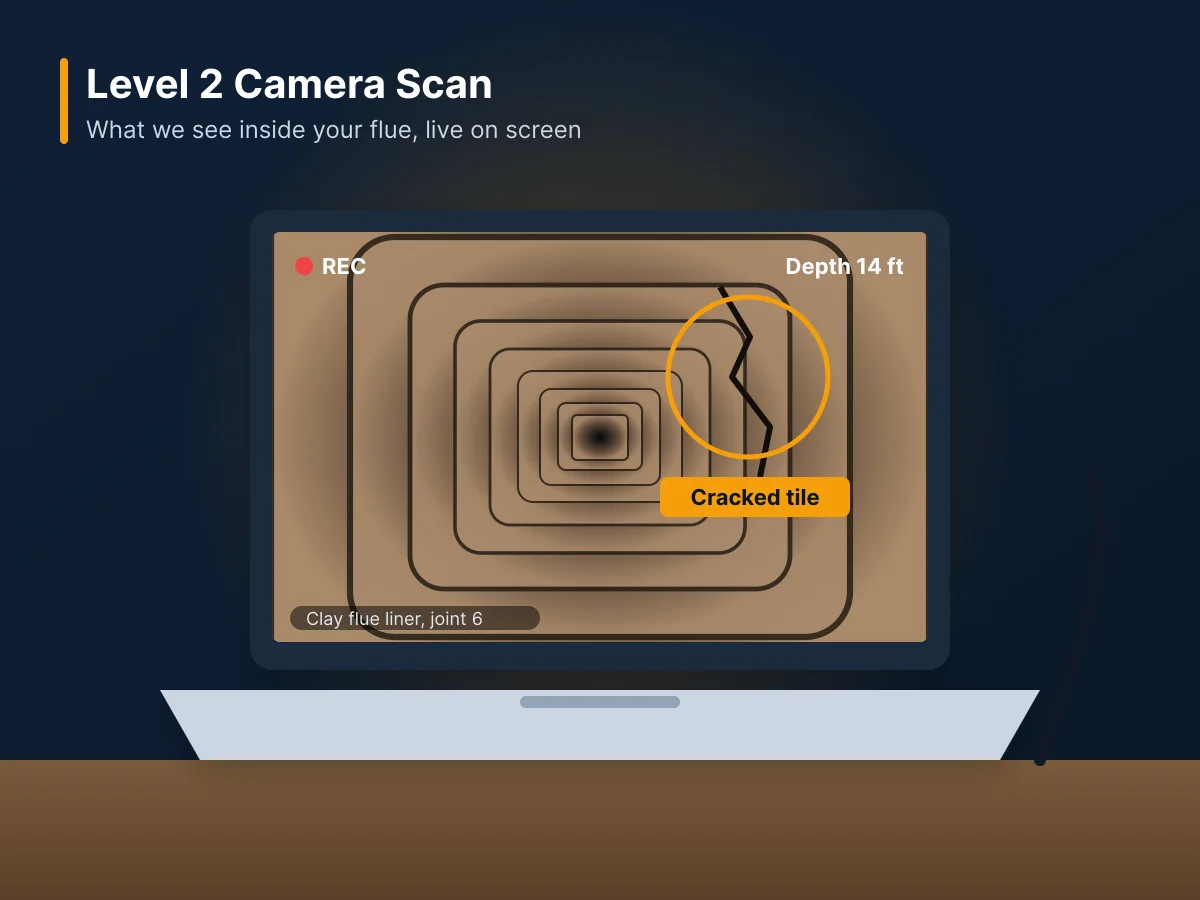
Live camera scan of a flue during a Level 2 inspection

Crown damage found during a roof check
Your Report
What Your Inspection Report Includes
- The inspection level and the date
- Labeled photos of the firebox, flue, crown, cap, and flashing
- Camera findings for the flue, with the location of any cracks or gaps
- A plain rating for each part: good, watch, or repair
- Safety notes on venting, clearances, and carbon monoxide
- A separate repair estimate, only if something needs fixing
Buyers can share the report with their agent and lender. Owners can keep it on file for insurance.

Our Checklist
What We Check During a Chimney Inspection
Inside the Home
Firebox walls and firebrick, damper and damper seal, smoke shelf and smoke chamber, flue tiles or metal liner, and creosote level. CSIA recommends cleaning at 1/8 inch of buildup. We also check stove and insert connector pipes.
On the Roof
Chimney crown, cap and screen, chase cover on factory built chimneys, flashing where the chimney meets the roof, brick, mortar joints, and chimney height above the roof.
Venting and Safety
Furnace and water heater flues, draft, clearance from wood framing, signs of heat damage in the attic, and carbon monoxide detector placement.

Cracked clay flue tile found on camera

Fireplace safety check: draft, damper and CO alarm
Home Buyers and Sellers
Chimney Inspections for Home Buyers and Sellers
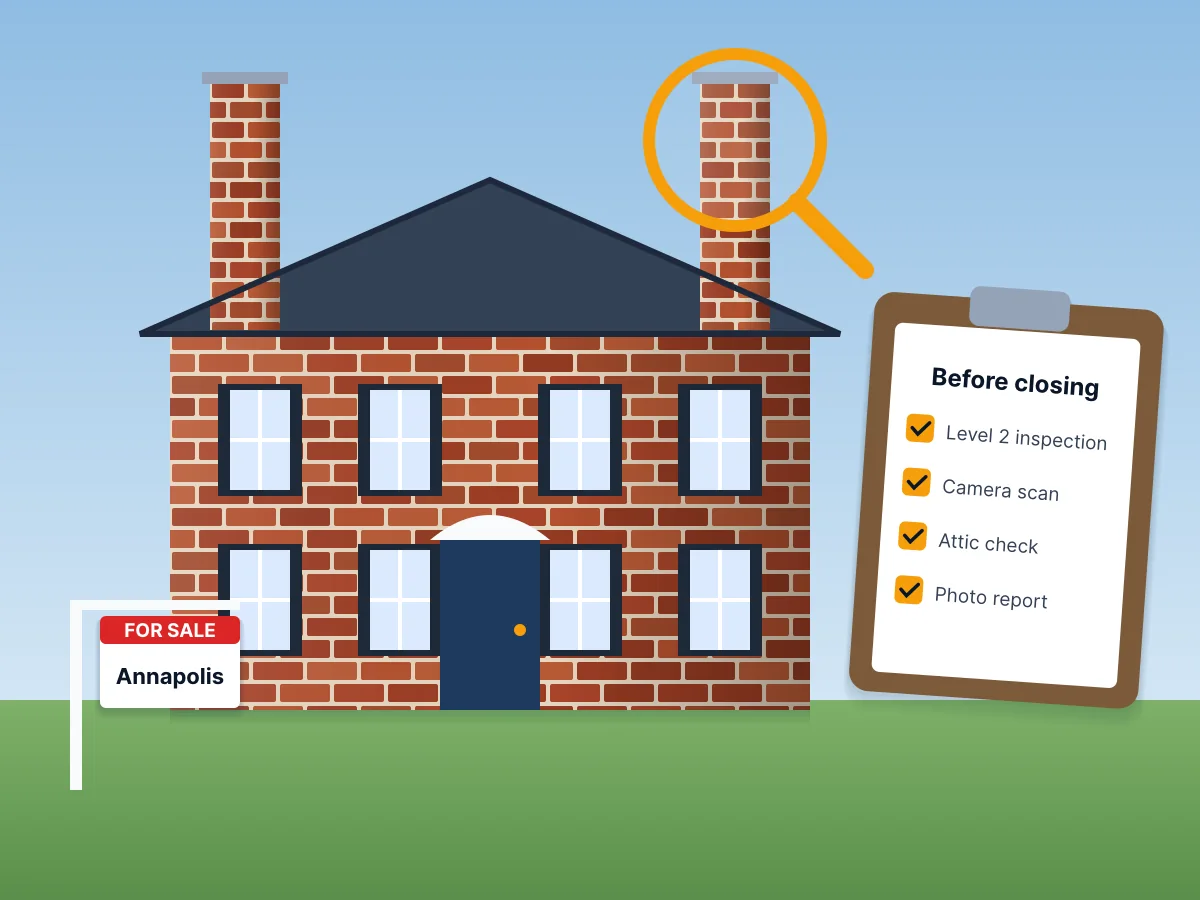
NFPA 211 calls for a Level 2 inspection when a property is sold or transferred. In Annapolis, many homes have chimneys that are 50 to 100 years old, and a buyer often has no idea when the flue was last checked.
What Does a Home Inspector Not Check on a Chimney?
A general home inspection usually looks at what can be seen from the firebox and the roof. The InterNACHI Standards of Practice say home inspectors are not required to inspect the interior of flues or chimneys. That is why many agents recommend a separate chimney inspection before closing.
Is Your Chimney Usable or Only Decorative?
Some fireplaces in older homes were closed off or were never safe to burn in. A Level 2 inspection tells you if the fireplace can be used as is, needs repair, or should stay decorative, before you sign.
Pricing
How Much Does a Chimney Inspection Cost in Annapolis?
Your price depends on the number of flues, roof height and pitch, how hard the chimney is to reach, and whether you need a Level 2. We give you the exact price before we begin.
Why Is a Level 2 Inspection More Expensive?
A Level 2 takes longer, uses camera equipment, and includes the attic, crawl space, and basement, plus a detailed photo report.
Typical Chimney Inspection Prices
| Inspection | Typical Range (2026) |
|---|---|
| Level 1 inspection | $150 to $300 |
| Level 1 inspection with chimney cleaning | $200 to $400 |
| Level 2 inspection with camera scan | $250 to $600 |
| Level 3 inspection | Usually $500 and up, quoted after Level 2 |
These are typical U.S. ranges from 2026 cost guides such as Angi and HomeGuide, not a fixed quote.
Warning Signs
Warning Signs You Should Not Wait For
Notice any of these at home? Book an inspection before you light another fire.
| Sign You Notice | What It Can Mean |
|---|---|
| Smoke rolls into the room | Blockage, buildup, or a draft problem |
| Strong tar or campfire smell, mostly in summer | Creosote reacting with humid Bay air |
| Water stains on the ceiling or wall near the chimney | A cracked crown or failed flashing |
| Pieces of tile or mortar in the firebox | A deteriorating flue liner |
| White powder on the outside brick | Water moving through the masonry |
| Loud roaring or popping during a fire | A possible chimney fire: call 911 first |
| Your CO detector goes off | A venting problem: leave the house and call 911 |
Second Opinion
Got a Big Repair Quote? Get a Second Opinion
Chimney repair quotes can range from a few hundred dollars to many thousands, and it is hard to judge them from the ground. A Level 2 inspection with camera footage shows you exactly what is wrong. If the damage is smaller than you were told, you will see it on the screen. If the repair is needed, you will know why.
Book a Second Opinion Inspection
Send us the quote you received, and we will check the same areas with a camera and give you a written, photo backed answer.
Hiring Tips
How to Choose a Chimney Inspector in Annapolis
- Ask about certification. The CSIA certifies chimney sweeps and lists them at csia.org.
- Check the license for repairs. The Maryland Department of Labor says sweeping is not state licensed, but repairs like caps and rebuilding need an MHIC license.
- Ask what level you are getting. A good inspector names the level and explains why.
- Expect photos. You should see what the inspector sees.
- Watch for red flags. Very cheap coupon inspections followed by big repair quotes, no written report, or pressure to sign the same day.
Local Service
Chimney Inspection Near You in Annapolis, MD
We inspect chimneys all over Annapolis, from the brick homes on Prince George Street, Duke of Gloucester Street, and around the Maryland State House, to Eastport across Spa Creek, and the neighborhoods near St. John’s College and the U.S. Naval Academy. We also cover Murray Hill, West Annapolis, Admiral Heights, Hillsmere, Bay Ridge, and the homes off Forest Drive, Riva Road near Annapolis High School, and West Street.
- Historic District
- Eastport
- Murray Hill
- West Annapolis
- Admiral Heights
- Hillsmere
- Bay Ridge
- Forest Drive
- Riva Road
- Parole
Annapolis is hard on chimneys. Humid summers off the Chesapeake Bay soak into brick and mortar, and winter freeze and thaw cycles widen every small crack. That is why we pay close attention to crowns, flashing, and flue tile joints here.
Inspections in the Historic District
Exterior changes in the Annapolis Historic District often need approval from the city’s Historic Preservation Commission. If your inspection finds exterior repairs, our photos and written notes help support your application.
Areas We Serve Around Annapolis
FAQs
Chimney Inspection FAQs
Is a chimney inspection worth it?
Yes. A yearly inspection usually costs far less than fixing water damage or a cracked liner, and it catches fire and carbon monoxide risks early. NFPA 211 calls for an inspection at least once a year.
How long does a chimney inspection take?
A Level 1 usually takes 30 to 60 minutes. A Level 2 with a camera scan and attic check usually takes 60 to 90 minutes.
Do I need an inspection if I rarely use my fireplace?
Yes. Animals, nests, water, and shifting tiles can damage a chimney you never light. Your chimney may also vent your furnace or water heater, which run every day.
Do roofers check chimneys?
Roofers check the flashing where the chimney meets the roof. They usually do not inspect the flue, liner, or smoke chamber, which is where most fire risks are.
How can I check my own chimney?
From the ground, use binoculars to look for a missing cap, cracked crown, or loose bricks. Inside, open the damper and shine a flashlight up the flue. Do not climb on the roof. If you see black glaze, cracks, or debris, book an inspection.
How much is a fireplace inspection?
A basic fireplace and chimney inspection usually falls in the Level 1 range of about $150 to $300. Gas fireplace checks are often at the lower end.
What is the 3 2 10 rule for chimneys?
It is a building code rule for chimney height. A chimney must rise at least 3 feet above where it passes through the roof and at least 2 feet higher than any part of the roof within 10 feet. A short chimney can cause poor draft and smoke problems.
Will homeowners insurance pay for chimney repair?
Many policies cover sudden damage, like a lightning strike, a fallen tree, or a storm, but not normal wear and tear. A dated inspection report helps show the chimney was maintained. Check your own policy for details.
What is the lifespan of a chimney?
A well built masonry chimney can last for many decades, but parts like the crown, cap, mortar joints, and flashing wear out much sooner. Yearly inspections help them last.
What happens if you find a problem?
We show you the photos, explain the risk in plain words, and give you a separate written estimate. You decide if and when to repair.
Have a question we did not cover? See our full chimney FAQs, read about our chimney cleaning in Annapolis, or contact us.
Book Your Chimney Inspection in Annapolis Today
Whether you are closing on a home in Eastport or getting ready for winter in Severna Park, a clear answer about your chimney is one call away. For an honest, photo backed chimney inspection Annapolis homeowners can count on, call Annapolis Chimney Pros at (667) 301-7778.
Annapolis Chimney Pros
839 Bestgate Rd #100, Annapolis, MD 21401
Phone: (667) 301-7778
Sources: National Fire Protection Association (NFPA 211), Chimney Safety Institute of America, InterNACHI Standards of Practice, Maryland Department of Labor, U.S. Centers for Disease Control and Prevention, International Residential Code (R1003.9), and Angi and HomeGuide 2026 cost guides.