Orphaned Water Heater: Why Your Chimney May Need a Liner
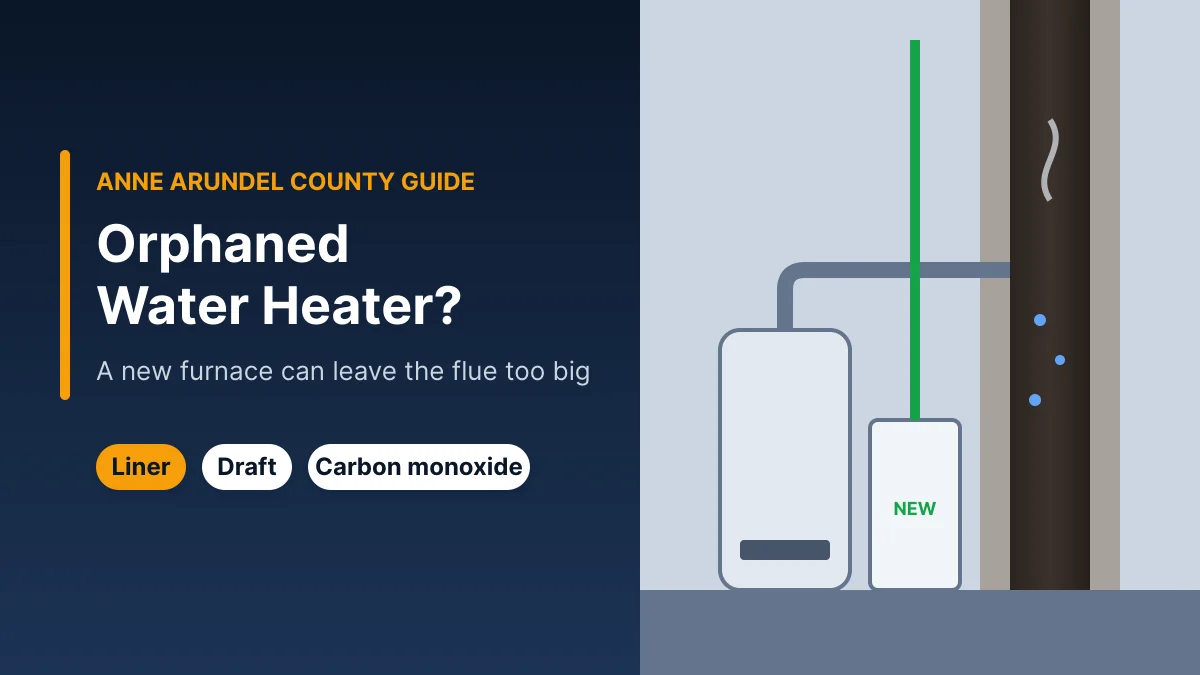
An orphaned water heater is a gas water heater left venting alone into a chimney flue that it used to share with a furnace or boiler. It usually happens when the old furnace is replaced with a high efficiency model that vents out the side of the house. The water heater stays behind in a flue that is now far too big for it, and that can lead to poor draft, condensation damage and carbon monoxide spilling into the home.
This guide explains why it happens, the warning signs, the ways to fix it and what to ask your heating contractor before a furnace swap. The most common fix is a liner sized to the water heater, which our chimney liner repair team in Annapolis installs.
Why Does a New Furnace Cause a Venting Problem?
A chimney flue is sized for the appliances that use it. When a big, hot furnace exhaust and a small water heater exhaust share a flue, the furnace keeps the flue warm and the draft strong. Take the furnace away and the small, cooler exhaust from the water heater alone cannot heat that big flue enough to draft well.

The home inspection group InterNACHI explains that the remaining water heater may not produce enough heat to create a proper draft, so exhaust can spill around the draft hood into the house. It also notes that water vapor in the exhaust can condense on the flue walls. In a masonry chimney, that moisture damages the clay liner, the mortar and the brick, and can cause spalling.
Utilities warn about this too. A customer notice from CenterPoint Energy describes it as a potentially dangerous carbon monoxide hazard and says that under some conditions the old chimney may not vent the water heater’s exhaust, which can spill back into the home.
What Are the Warning Signs?

- Scorch marks or melted plastic near the draft hood. InterNACHI lists this as a sign that exhaust is spilling back.
- Rust on the water heater vent pipe. Condensation running back down the pipe can corrode it.
- White staining on the outside of the chimney. Moisture moving through the brick leaves mineral deposits behind.
- Crumbling mortar or flaking brick at the base of the chimney. Acidic condensate can drain to the bottom of the flue and break down the masonry.
- A damp or musty smell near the water heater or chimney. Water may be building up inside.
- A carbon monoxide alarm going off. Get everyone outside and call 911.
A sealed off opening in the chimney below the water heater connection is another clue. It often marks where the old furnace used to connect. If you see a new furnace with white plastic vent pipes going out a side wall while the water heater still runs into the chimney, the setup is worth a closer look.
How Do You Fix It?
Install a Liner Sized to the Water Heater
The most common fix is a new metal liner run down the chimney and sized to the water heater alone. A smaller flue warms up quickly, drafts better and keeps condensation to a minimum. CenterPoint notes that a chimney flue may need to be outfitted with a smaller diameter liner if you keep the existing water heater. The liner size should come from the vent sizing tables in the National Fuel Gas Code (NFPA 54) and the water heater’s instructions, not a guess.
Replace the Water Heater
Another option is to replace the water heater at the same time as the furnace. InterNACHI notes that switching to an electric or high efficiency water heater is often the easiest and most cost effective fix. Many high efficiency and power vent water heaters vent through a side wall with plastic pipe, just like the new furnace, so the chimney is no longer needed for either appliance. The old flue can then be capped and sealed at the top so rain and animals stay out.
Use an Indirect Water Heater With a Boiler
If you are replacing a boiler, CenterPoint mentions an indirect tank, sometimes called a sidearm, that heats water using the boiler instead of its own burner. That removes the separate water heater flue altogether.
What Kind of Liner Is Used?
The liner must be listed for the appliance it serves and installed as one continuous run from the water heater connector to the top of the chimney. For a standard gas water heater, flexible aluminum liners listed for gas appliances are common. Oil appliances and some other types need stainless steel. A cap at the top keeps out rain and animals, and the space between the liner and the old flue is left as it is or insulated, depending on the system.
A properly sized liner warms up within minutes of the burner starting, which is what gets the draft going and keeps moisture from condensing on the walls.
What Happens During a Liner Installation?
- Inspect and measure. The flue is scanned with a camera and the chimney height and water heater input are recorded.
- Size the liner. The installer picks the diameter from the vent tables and the appliance instructions.
- Clean the flue. Loose debris and old buildup are removed so the liner can pass.
- Run the liner. The liner is fed down from the roof in one piece and connected at the bottom.
- Cap the top. A cap and top plate seal the chimney around the liner.
- Test the draft. The water heater is fired and checked for proper draft and no spillage.
How Do the Options Compare?
| Option | What it involves | Best for |
|---|---|---|
| Liner sized to the water heater | A metal liner from the water heater to the top of the chimney, with a cap | Keeping a water heater that is in good shape |
| New high efficiency or power vent water heater | A new water heater vented through a side wall | A water heater that is older or due for replacement |
| Electric or heat pump water heater | No combustion venting needed | Homes ready to move away from gas for hot water |
| Indirect tank with a boiler | The boiler heats the water through a coil | Homes replacing a boiler |
Should You Test for Spillage First?
Yes. CenterPoint suggests a worst case spillage test before keeping an existing water heater on the old chimney. A technician runs exhaust fans, the dryer and other appliances, then checks whether the water heater still drafts properly. It shows how the system behaves on the worst day, not just on a calm one, which matters most in tight, well sealed homes with strong kitchen and bath fans. A camera inspection of the flue, which shows cracks, gaps and condensation damage, is a good partner to that test.
The condition of the old chimney matters as well. If the clay tiles are cracked or the mortar has washed out, our chimney inspection service can show you exactly what the moisture has already done.
What Should You Ask Before Replacing a Furnace?
- Will the new furnace vent through the chimney or through a side wall?
- If it leaves the chimney, what will the water heater vent into?
- Is a liner for the water heater included in the quote, and what size is it?
- Would it make sense to replace the water heater at the same time?
- Will you do a draft or spillage test after the work is done?
- Who is installing any liner, and is it listed for the appliance it serves?
Asking these questions up front avoids the most common surprise: a new furnace that works perfectly while the water heater next to it starts to backdraft.
Why Is This Common in Older Anne Arundel Homes?
Many homes built from the 1950s through the 1980s were designed with a gas or oil furnace and a water heater sharing one masonry chimney. In places like Severna Park, where about half of homes were built before 1980, a lot of those original furnaces have since been replaced with high efficiency units that vent out the side of the house. Each of those swaps can leave a water heater alone in a flue built for two appliances.
The humid Chesapeake climate adds to the problem. A chimney that already takes on moisture from rain and damp air has little room to absorb more from condensing exhaust. Over a few winters, that extra water can wash out mortar joints, crack clay tiles and stain the brick, so the sooner the venting is fixed, the less repair the chimney itself will need.
How Do You Stay Safe While You Decide?
- Keep a working carbon monoxide alarm near the water heater and on every level of the home, especially near bedrooms, and test it every month.
- Do not store paint, boxes or anything else around the water heater that blocks air or could catch fire.
- Watch the draft hood for scorch marks and the vent pipe for rust, and call for service if either appears.
- If you smell gas, leave the house right away and call 911 or BGE from outside.
- If a carbon monoxide alarm sounds, get everyone outside and call 911.
Frequently Asked Questions
What does orphaned mean for a water heater?
It means the water heater is the only appliance left on a chimney flue that it used to share with a furnace or boiler. The flue is then too large for it.
Is it dangerous?
It can be. A water heater that does not draft properly can spill exhaust, including carbon monoxide, into the home, and condensation can damage the chimney over time.
Does every furnace replacement cause this?
No. It happens when the new furnace stops using the shared chimney flue and the water heater stays on it. If the furnace still vents into the chimney, the flue sizing may still work.
What size liner does a water heater need?
It depends on the water heater’s input, the chimney height and the connector. The size should be chosen from the NFPA 54 vent tables and the appliance instructions by a qualified installer.
The Bottom Line
An orphaned water heater is easy to miss and easy to fix once you know to look for it. A liner sized to the water heater, or a new water heater that vents on its own, restores a safe draft and protects the chimney from condensation. Ask about it any time a furnace or boiler is replaced.
Call Annapolis Chimney Pros at (667) 301-7778 or book a flue check online. We are open 24/7, and we will scan the flue, check the draft and give you a written price before any liner work starts.
Sources: CenterPoint Energy customer notice on water heater venting after a furnace or boiler upgrade, InterNACHI guide for home inspectors on water heater venting, NFPA 54 National Fuel Gas Code, and American Community Survey data for Severna Park published by Point2Homes.