

Cracked Flue Liner: Signs, Risks and Repair Options
A cracked flue liner is one of the most serious problems a chimney can have, and one of the hardest to see. The liner is the inner wall of the chimney, usually clay tile in older Annapolis homes. When tiles crack or joints open, heat can reach the brick and nearby wood framing, and smoke and carbon monoxide can escape into the house. Because the damage is inside the flue, most homeowners only find out during an inspection or after a chimney fire.
Our chimney liner repair service in Annapolis finds and fixes flue damage with camera inspections and relining. This guide explains the causes, the warning signs and the repair options.
What Cracks a Flue Liner?
Clay tiles crack mainly from sudden heat, long term moisture and movement. A chimney fire is the most common cause: burning creosote can heat the flue far beyond normal temperatures in minutes, and the tiles crack from the shock. Water from a missing cap or cracked crown also soaks the tiles and mortar, and freeze and thaw cycles open the joints over time. Settling of the house, earthquakes and lightning can crack them too.
- Chimney fires. Often quiet and unnoticed, yet they can crack many tiles at once.
- Water. Rain through an open flue or crown soaks tiles and mortar joints.
- Acidic condensation. Gas appliances in oversized flues produce moisture and acids that eat the mortar.
- Age and heat cycling. Decades of heating and cooling wear joints and tiles.
- Movement. Settling, storms or impact can shift tiles out of line.
What Are the Warning Signs?
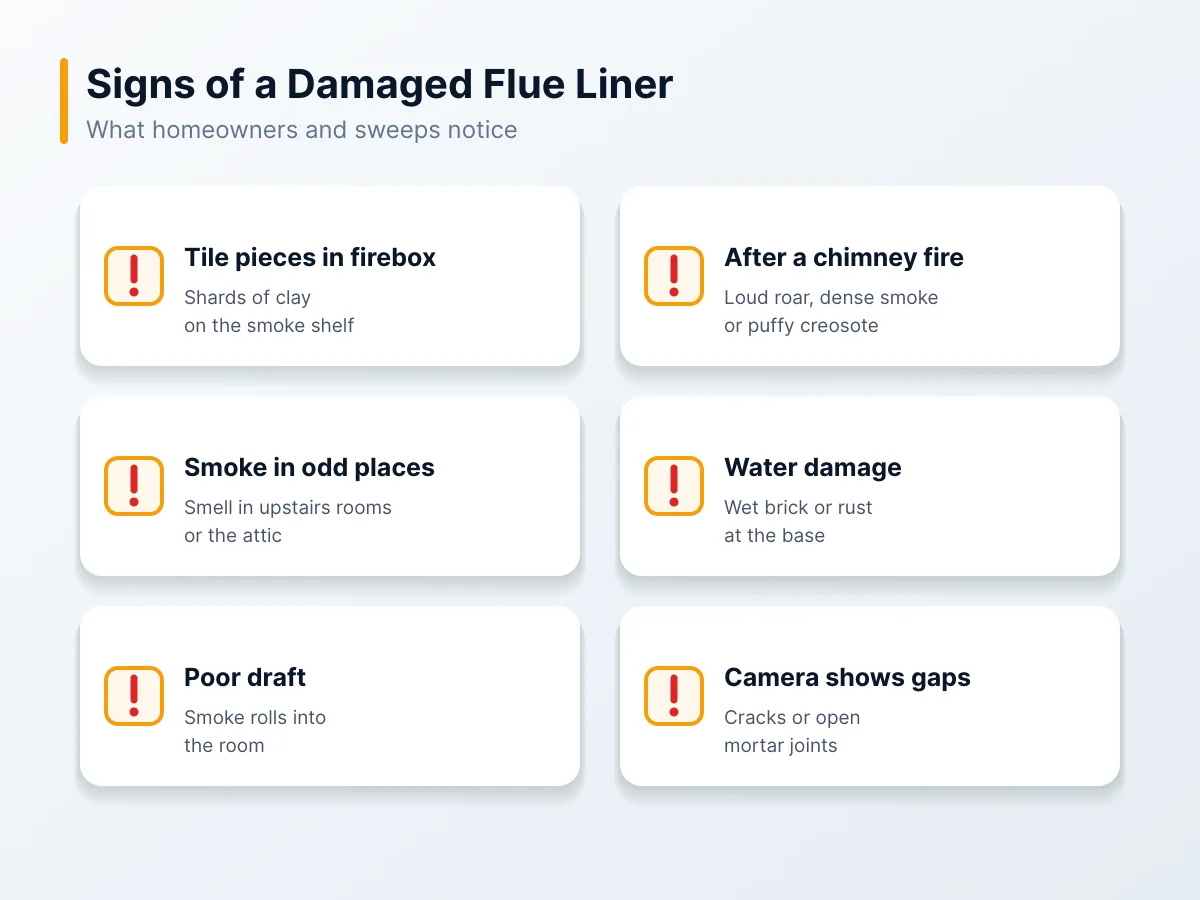
- Pieces of clay tile or flakes on the smoke shelf or in the firebox.
- A past chimney fire, a loud roaring sound or very puffy, flaky creosote.
- Smoke smell in upstairs rooms, closets or the attic.
- Poor draft or smoke rolling into the room.
- Stains or damp patches on walls near the chimney.
- A carbon monoxide alarm going off when an appliance runs.
Many cracks give no outside sign at all. That is why NFPA 211 calls for a yearly inspection and a more detailed Level 2 inspection after events such as a chimney fire.
Why Do Gas Appliances Make It Worse?
Gas burns cleanly, but its exhaust contains a lot of water vapor. In a cold, oversized clay flue, that vapor cools and condenses on the tile walls. The condensate is mildly acidic and slowly dissolves the mortar between tiles. Over years, joints open, tiles shift and pieces fall to the bottom of the flue. This is common when an old oil or gas furnace was replaced and a water heater was left venting into a flue built for a much larger appliance.
The fix is usually a smaller, listed liner sized from the gas vent tables, which warms up quickly and carries the moisture out before it can condense. If you have had a furnace replaced in the last decade and the water heater still uses the chimney, it is worth having the flue checked.
How Do Clay Tiles Fail Over Time?
Clay is strong but brittle. It does not stretch, so any sudden change in temperature or any movement in the chimney can crack it. Hairline cracks often start at the corners of square tiles. Mortar joints between tiles wear first, then tiles slip out of line, leaving ledges where creosote collects. Eventually whole pieces break off. Each stage makes the next one more likely, which is why small flue problems tend to grow. A crack that is a few inches long this year can become a missing corner next year, especially after a cold winter with many freezing nights. Catching damage at the first stage keeps the repair options wide open and usually keeps the cost lower as well.
Why Is a Damaged Liner Dangerous?
Fire Risk
A liner keeps heat inside the flue. When tiles crack, heat can pass through the brick to wood framing around the chimney. Over time this can char and ignite wood, sometimes far from the fireplace inside a wall or attic.
Carbon Monoxide Risk
Cracks and open joints let exhaust escape before it reaches the top. With wood fires, you may smell smoke. With gas furnaces and water heaters, the gases have no smell. Working carbon monoxide alarms on every level of the home and near bedrooms are essential.
Faster Masonry Damage
Exhaust and moisture leaking through cracks attack the brick and mortar from inside, which can lead to crumbling joints and staining on the outside of the chimney.
How Is the Damage Found?
A camera inspection is the best tool. A Level 2 inspection under NFPA 211 includes a video scan of the entire flue, which shows cracked or missing tiles, open joints, offsets and glazed creosote. The CSIA explains in its homeowner resources that inspections should follow the NFPA 211 standard. You should receive photos or video so you can see the damage yourself.
What Are the Repair Options?

Liner Repair Systems
For limited damage, such as a few open joints or small cracks, there are repair systems that apply a heat resistant coating inside the existing tiles. These are only suitable when most of the liner is sound and the product is listed for the use.
Stainless Steel Relining
The most common fix is a new stainless steel liner run inside the old flue. It bypasses the cracked tiles entirely, is sized to the appliance and, for wood, is usually insulated. Our liner installation guide walks through the process.
Cast in Place Relining
For old, irregular or heavily damaged flues, a cast in place liner is poured around a form inside the chimney. It fills cracks and voids, adds strength and creates a smooth new flue. Our guide to chimney liner types compares these options.
Replacing Clay Tiles
Replacing clay tiles in an existing chimney usually means opening the chimney, so it is rarely the first choice. It may make sense when the chimney is being rebuilt anyway, for example after major storm damage or when the top of the chimney must come down. In most other cases, relining inside the old tiles is faster, cleaner and less disruptive to the house, and it leaves the outside of the chimney looking exactly as it did before.
Can You Use the Fireplace Until It Is Fixed?
It is not recommended. A damaged flue can let heat and gases into the house. Until the flue is repaired and inspected, avoid using the fireplace and any appliance connected to that flue. If a furnace or water heater uses the damaged flue, ask your heating contractor and chimney professional about safe options in the meantime.
What Should You Do While You Wait for Repairs?
Keep the fireplace damper closed and do not burn anything in it. If the flue serves a furnace or water heater, follow your heating contractor’s advice, since some appliances may need to be shut off or vented differently until the liner is fixed. Test your carbon monoxide alarms and make sure there is one on every level and near sleeping areas. If anyone in the home has headaches, dizziness or nausea that improve when they leave the house, get everyone outside and call 911.
What Does Insurance Cover?
Damage from a sudden covered event, such as a chimney fire or lightning, is often covered by homeowners insurance. Cracks from age, wear or long term moisture usually are not. A Level 2 inspection report that explains the cause helps with any claim. Our chimney repair service page explains how we document damage for adjusters.
Why Is This Common in Local Homes?
Most masonry chimneys in Arnold, Severna Park, Pasadena and Crofton built from the 1950s to the 1980s have clay tile flues that are now several decades old. Many have been through chimney fires, freeze and thaw winters and furnace changes. Older homes in Annapolis may have no tiles at all. Our chimney inspection service finds damaged flues regularly in homes that showed no warning signs from the outside.
How Can You Prevent Liner Damage?
- Sweep regularly. Removing creosote prevents the chimney fires that crack tiles.
- Burn dry wood. Wet wood makes more creosote and cooler, slower fires.
- Cap the flue. A cap keeps rain from soaking the tiles and joints.
- Fix the crown. A sound crown keeps water out of the top of the flue.
- Size the flue to the appliance. Oversized flues for gas appliances cause condensation that eats mortar.
- Inspect every year. Small cracks found early are easier and cheaper to fix.
What Happens After a Chimney Fire?
If you heard a loud roar like a freight train, saw dense smoke or sparks from the top of the chimney or found puffy, honeycomb shaped creosote, you may have had a chimney fire. Stop using the fireplace and book a Level 2 inspection. Fires often crack tiles even when the fire goes out on its own. The inspector checks the full flue with a camera, looks for heat damage to the damper, smoke chamber and nearby framing and documents everything for your records and any insurance claim. Ask for the video so you can see the damage, and keep the report with your home records.
What Should a Repair Quote Include?
- Camera photos or video of the damage.
- The repair method and why it was chosen.
- Liner type, grade, size and insulation if relining.
- Top plate, cap and bottom connection.
- Any permit and inspection.
- Warranty terms in writing.
Frequently Asked Questions
How do I know if my flue liner is cracked?
A camera inspection is the most reliable way. Tile pieces in the firebox, a past chimney fire, smoke odors upstairs or poor draft are warning signs.
Is a cracked liner an emergency?
It is a serious safety issue. Stop using the flue and book an inspection soon. If a carbon monoxide alarm sounds, leave the house and call 911.
Can cracked tiles be patched?
Small, limited damage can sometimes be repaired with a listed repair system. Widespread cracks usually call for a new liner.
How long does relining take?
Many stainless steel relines take a day. Cast in place relining takes longer because the material needs to cure.
The Bottom Line
A cracked flue liner lets heat and gases go where they should not. If you see tile pieces, had a chimney fire or notice smoke where it does not belong, stop using the flue and book a camera inspection. Most damaged flues are fixed with a new stainless or cast in place liner that makes the chimney safe again.
Call Annapolis Chimney Pros at (667) 301-7778 or book a flue camera inspection. We are open 24/7 and will show you video of your flue before recommending a repair.
Sources: NFPA 211 Standard for Chimneys, Fireplaces, Vents and Solid Fuel Burning Appliances and Chimney Safety Institute of America homeowner resources.


