

Leaking Chimney? How to Find the Source and Fix It
A leaking chimney usually shows itself as water in the firebox, a stain on the ceiling or wall beside the fireplace or damp, musty brick inside the house. The hard part is finding where the water gets in, because it can enter at the top, the sides or the roofline and travel a long way before it shows up. Fixing the wrong part wastes money, so the first step is always to find the source.
Our chimney waterproofing service in Annapolis tracks down and stops chimney leaks. This guide walks through the five common sources and how to tell them apart.
Where Does the Water Get In?
Almost every chimney leak comes from one or more of five places: an open or damaged flue with no cap, a cracked crown, porous brick and open mortar joints, failed flashing at the roofline or condensation inside the flue. Many chimneys have more than one at the same time.

Missing or Damaged Cap
Without a cap, rain falls straight down the flue. You will often see water or rust in the firebox and on the damper after every rain. Our chimney cap service page explains how a cap fixes this.
Cracked Crown
A cracked crown lets water soak into the top courses of brick and down the outside of the flue tile. Signs include flaking brick near the top and white staining on the upper chimney. Our chimney crown repair page covers the fix.
Brick and Mortar
Brick is porous, and worn mortar joints let water in even faster. Wind driven rain can push water deep into the masonry. The National Park Service calls water the most destructive force acting on brick, and notes that it is behind most masonry damage.
Flashing
Flashing seals the joint where the roof meets the chimney. When it lifts, rusts or relies on old caulk, water runs behind it and into the attic or ceiling. A stain on the ceiling beside the chimney is a classic flashing leak. Our flashing repair guide explains the right way to fix it.
Condensation
Some leaks are not rain at all. Gas furnaces and water heaters venting into an oversized, unlined or cold flue can produce condensation that soaks the brick from inside. Damp walls on dry days and white staining low on the chimney are clues.
How Can You Tell Which Source Is Yours?
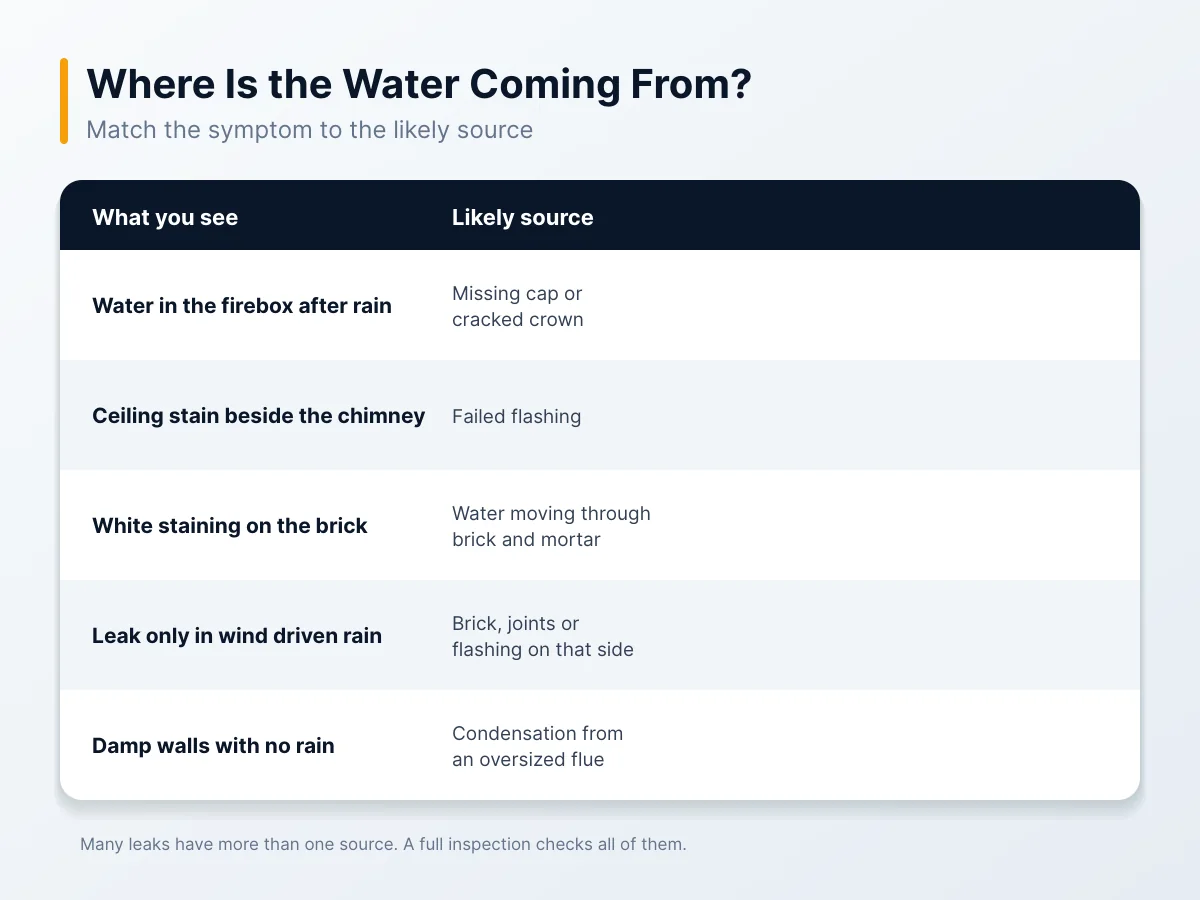
| Clue | Most likely source |
|---|---|
| Water in the firebox in every rain | Missing cap or cracked crown |
| Ceiling stain right next to the chimney | Flashing |
| Leak only during wind driven rain from one side | Brick or flashing on that side |
| Flaking brick and white stains near the top | Crown and upper brick |
| Damp walls on dry days | Condensation from an appliance flue |
Keep a simple log: the date, the weather, the wind direction and where you saw water. That record is extremely useful to the person who inspects the chimney.
What Should You Do Right Away?
- Catch drips and move rugs, furniture and stored items away from the leak.
- Photograph stains and wet areas so you can track changes.
- Close the damper to keep rain from blowing into the room.
- Avoid using the fireplace until the source is found if water is reaching the firebox.
- Book an inspection before paying for any repair.
How Is Each Source Fixed?
- Open flue: install a properly sized cap.
- Cracked crown: seal fine cracks or rebuild a failing crown with an overhang and drip edge.
- Brick and joints: repoint worn joints, replace damaged brick and consider a breathable water repellent afterward.
- Flashing: replace with step and counter flashing set into the mortar joints.
- Condensation: reline the flue to the right size for the appliance.
How Is a Leak Tested and Confirmed?
A good inspection starts with the clues you collected, then checks each part of the chimney in order. From the roof, the inspector looks at the cap, crown, brick, mortar and flashing. Inside, they check the firebox, damper, smoke chamber and, where reachable, the attic around the chimney. A camera scan of the flue shows whether water is entering from the top or through cracks in the tiles.
Sometimes the source is still unclear. In that case, a controlled water test can help. Water is run over one area at a time, starting low on the chimney and moving up, while someone watches inside for the leak to appear. It takes time, but it avoids guessing. Moisture meters can also show which parts of the brick stay wet the longest.
What About Interior Damage?
Once the leak is fixed, let the area dry fully before repairing drywall or paint. Wet insulation in the attic should be replaced. Check wood framing near the chimney for soft spots or dark staining, and watch for musty smells that could mean mold. Photos of the damage and the repair are worth keeping for your records and for any future buyer.
Should You Seal the Brick?
Only after the other sources are fixed, and only with the right product. The Brick Industry Association’s Technical Note 6A recommends siloxane based repellents if one is used, warns against film forming coatings in freeze and thaw climates and says repairs to joints and flashing come first. Our guide on whether chimney waterproofing is worth it covers this in detail.
Why Are Leaks So Common Around Annapolis?
The Chesapeake region gets heavy summer storms, tropical remnants and winter nor’easters that drive rain sideways for hours. Homes along the water in Edgewater, Pasadena and Arnold take the worst of it. Add humid air that keeps masonry damp and many freeze and thaw cycles each winter, and even small gaps grow into leaks. Many chimneys here are also decades old, with original flashing and crowns near the end of their life.
Why Do Chimney Leaks Get Worse Over Time?
Water that gets into masonry rarely leaves the way it came. It soaks the brick, washes out mortar and, in winter, freezes and expands. Each cycle opens the gaps a little wider, so a leak that only showed up in heavy storms can start appearing in light rain. Inside the house, repeated wetting rots framing, ruins drywall and invites mold. Acting on the first stain is far cheaper than waiting for the second or third.
Frequently Asked Questions
Why does my chimney leak only in some storms?
Leaks that appear only in wind driven rain often come from brick, mortar or flashing on the side facing the wind.
Can a roofer fix a chimney leak?
A roofer can fix flashing. Leaks from the crown, cap, brick or flue need a chimney or masonry pro. An inspection shows which you need.
Will a sealer stop my leak?
Not by itself. Seal the brick only after the cap, crown, joints and flashing are sound.
Is a chimney leak covered by insurance?
Sudden damage from a covered event may be. Leaks from age and wear usually are not.
The Bottom Line
A leaking chimney has a source, and finding it is the key to a lasting fix. Check the cap, crown, brick, flashing and flue in that order, keep a log of when it leaks and fix the cause before sealing anything. Most leaks are stopped for good once the right part is repaired.
Call Annapolis Chimney Pros at (667) 301-7778 or book a leak inspection. We are open 24/7 and will show you exactly where the water is getting in.
Sources: National Park Service, Common Problems with Brick Masonry, and Brick Industry Association Technical Note 6A.


