
Why Does My Chimney Smell? Causes and Fixes
A chimney smell is one of the most common complaints we hear in Annapolis, especially in summer. Most of the time it is the smell of creosote, the residue left by wood smoke, drifting back into the room on hot, humid days. Other odors point to water, animals or a house that is pulling air down the flue. Each one has a different cause and a different fix.
Our chimney waterproofing service in Annapolis tracks down odors along with leaks. This guide explains what each smell usually means and how to get rid of it.
Why Does It Smell Like Smoke When There Is No Fire?
Creosote has a strong, smoky odor. It builds up on the inside of the flue every time you burn wood. On hot, humid days, the smell gets stronger, and if air is moving down the chimney into the house instead of up and out, it carries that odor into the room. The CSIA notes that this is often worse in summer when humidity is high and air conditioning is running.
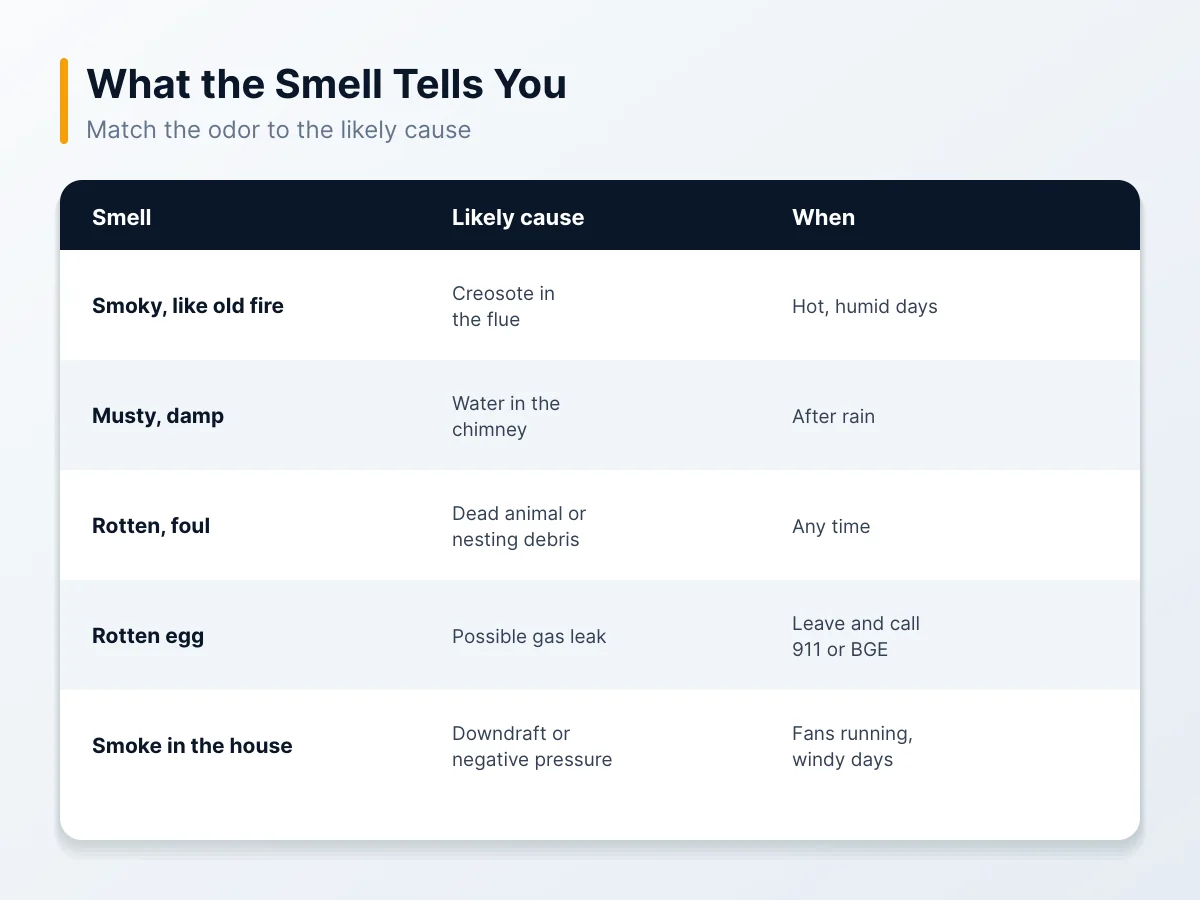
What Do Different Smells Mean?
| Smell | Likely cause | What to do |
|---|---|---|
| Smoky, like an old campfire | Creosote in the flue | Sweep the chimney and seal the damper |
| Musty, damp or moldy | Water getting into the chimney | Find the leak: cap, crown, flashing or brick |
| Rotten or foul | Dead animal or nesting debris | Have the flue checked and cleaned, then cap it |
| Rotten egg | Possible natural gas leak | Leave the house and call 911 or BGE from outside |
| Smoke in the house when fans run | Air pulled down the flue | Balance house air and check the draft |
A rotten egg smell is the warning odor added to natural gas. Never ignore it. Gas leaks are an emergency, unlike the other smells in this list.
Why Is It Worse in Summer?
Three things come together in an Annapolis summer. Humidity makes creosote odors stronger. Air conditioning and exhaust fans can pull outside air down the chimney to replace the air they move, a condition called negative pressure. And summer storms soak chimneys that have no cap or have cracked crowns, adding a musty smell to the mix. The result is a fireplace that smells far worse in July than it ever does in January.
How Do You Get Rid of a Smoky Odor?
- Have the chimney swept. Removing creosote removes most of the source. The CSIA notes that sweeping helps but may not fully solve it on its own.
- Close and seal the damper. Old throat dampers often leak. A top sealing damper at the top of the flue seals much tighter.
- Balance the air in the house. Crack a window when kitchen or bath fans run, or ask an HVAC pro about makeup air.
- Use simple absorbers. A tray of baking soda or cat litter in the firebox can soak up some odor.
- Use glass doors. Closed glass doors on the fireplace help block air movement.
The CSIA’s homeowner resources list the same steps and point out that the real issue is usually air being drawn down the chimney. Our chimney cleaning service covers the sweeping side of the fix.
How Does a Top Sealing Damper Help?
Most older fireplaces have a cast iron throat damper just above the firebox. After years of heat, rust and warping, many no longer close tightly, so air and odor slip past even when the damper is shut. A top sealing damper sits at the top of the flue and closes with a rubber or silicone gasket. When it is closed, the whole flue is sealed off from the outside, which cuts down on air moving through the chimney, keeps rain and animals out and often reduces odors noticeably. A cable runs down to the firebox so you can open it before lighting a fire.
What About Negative Pressure?
Modern homes are built tighter than older ones, and many have strong kitchen hoods, bath fans, clothes dryers and sometimes whole house fans. When these run, they push air out of the house, and the house pulls air back in wherever it can. A chimney is an easy path. That downward airflow carries creosote odor into the room and can even pull smoke in when a fire is burning. Opening a window near the fans, or having an HVAC contractor add a makeup air supply, gives the house another place to draw air from.
What About a Musty Smell?

A musty, damp smell usually means water is getting into the chimney. Rain falls down an uncapped flue, soaks through a cracked crown or runs behind failed flashing. Wet soot and wet masonry smell, and they can grow mold. The fix is to stop the water: a cap, crown repair and good flashing. Our guide to a leaking chimney explains how to find the source, and our chimney cap service page covers caps.
What if the Smell Is Foul?
A strong, rotten odor often means an animal died in the flue or on the smoke shelf, or that old nesting material and droppings are decaying there. Do not try to burn it out. Have the flue inspected and cleaned, and install a cap so it does not happen again. Raccoons, squirrels and birds are common in uncapped chimneys around Anne Arundel County.
When Is a Smell a Safety Concern?
Smoke odors in upstairs rooms, closets or the attic can mean cracks in the flue that let smoke escape inside the walls. That needs an inspection. Any gas smell is an emergency. And if you burn wood or run gas appliances, keep working carbon monoxide alarms on every level. The Consumer Product Safety Commission’s carbon monoxide information center explains the symptoms to watch for, since carbon monoxide itself has no smell.
Why Are Odors So Common Locally?
Humid Chesapeake summers, many uncapped older chimneys and tight, energy efficient homes with strong kitchen and bath fans all add up. Homes in Severna Park, Arnold and Crofton often have powerful range hoods or whole house fans that pull air down the flue. Older homes in Annapolis may have leaky original dampers. Fixing the combination of creosote, water and air movement usually solves even stubborn odors.
Can Waterproofing Help With Odors?
It can help with musty odors caused by brick that stays wet, but only after the cap, crown and flashing are sound. A breathable water repellent keeps the outer brick drier, which cuts down on damp smells inside. It does nothing for creosote odors or air movement. Our guide on whether chimney waterproofing is worth it explains when a treatment makes sense.
Frequently Asked Questions
Why does my fireplace smell like smoke in summer?
Creosote odor is stronger in humid weather, and air conditioning or exhaust fans can pull air down the flue into the room.
Will cleaning the chimney stop the smell?
It removes most of the source and usually helps a lot. Sealing the damper and balancing house air may also be needed.
Is a smoky smell dangerous?
A mild creosote smell is usually a comfort issue. Smoke smells upstairs or in the attic, or any gas smell, need prompt attention.
Does a chimney cap help with odors?
Yes, when the odor is musty from rain or foul from animals. A cap keeps both out.
The Bottom Line
A chimney smell usually comes from creosote, water or animals, carried into the room by air moving down the flue. Sweep the chimney, seal the damper, stop water with a cap and sound crown and balance the air in your house. Treat any gas smell as an emergency.
Call Annapolis Chimney Pros at (667) 301-7778 or book an odor inspection. We are open 24/7 and will find the source of the smell before recommending a fix.
Sources: Chimney Safety Institute of America homeowner resources and frequently asked questions on chimney odors, and U.S. Consumer Product Safety Commission carbon monoxide information center.


