Fall Chimney Checklist for Anne Arundel County Homeowners
A fall chimney checklist is the easiest way to make sure your fireplace or wood stove is ready before the first cold night. In Anne Arundel County that night usually comes in late October or November, and it is also when sweeps get the most calls. Working through the list in early fall gives you time to fix anything the inspection turns up.
Below are the ten steps we suggest to homeowners across the county, from booking chimney cleaning in Annapolis to setting up a safe place for ashes. After the list you will find tips for the conditions that are common in different towns, from waterfront homes on the South River to townhouses in Crofton and Odenton.
Why Is Fall the Best Time to Get Your Chimney Ready?
Fall gives you time to find and fix problems before you need the fireplace, and it lines up with the safety checks the CDC already recommends for this time of year.
- Summer leaves its mark. Months of humid Chesapeake air, spring nests and blown in leaves can change a flue that looked fine last winter.
- Repairs take time. A cracked crown or a new liner may need a second visit, and masonry work needs dry, mild weather.
- Clocks change in the fall. The CDC suggests checking carbon monoxide alarm batteries when you change your clocks each spring and fall. Daylight saving time ends on Sunday, November 1, 2026.
- Schedules fill up. Many homeowners wait for the first cold snap, so the earlier you book, the more choice you have.
What Should Be on Your List This Fall?
Work through these ten steps in order. The first one is for a professional, and most of the rest you can do yourself in an afternoon.

1. Book the Sweep and Inspection
The CDC advises having your chimney checked or cleaned every year, because debris can block it and push carbon monoxide back into the home. The national chimney standard, NFPA 211, also calls for a yearly inspection. A sweep removes soot and creosote, and the inspection finds cracks, gaps and water damage that you cannot see from the hearth.
2. Look at the Chimney From Outside
Stand in the yard with a pair of binoculars and look at the top of the chimney. Check that the cap is in place and not bent, that the concrete crown on top has no wide cracks, and that the metal flashing where the chimney meets the roof is flat and sealed. White stains on the brick, loose bricks or missing mortar are signs that water is getting in. Do not climb onto the roof to look.
3. Check for Birds and Animals
Chimney swifts nest in open chimneys from spring through summer. They are protected under the Migratory Bird Treaty Act, so a nest cannot be removed while the birds are using it. They usually leave for South America in early fall, and after that a sweep can clear the nest. Raccoons and squirrels also move into uncapped chimneys, which is one more reason to fit a cap with mesh sides.
4. Open and Test the Damper
Open and close the damper a few times. It should move freely and seal when closed. Shine a flashlight up past it to look for leaves, twigs or fallen debris. A damper that sticks, rattles or shows daylight when closed should be looked at by your sweep.
5. Inspect the Firebox and Hearth
Look at the bricks and mortar inside the firebox. Wide cracks, loose bricks or missing mortar let heat reach the wall behind the fireplace. Check the hearth in front for cracked tiles and make sure the glass doors close and the gaskets are intact. Our fireplace repair service covers firebox, hearth and door repairs.
6. Stock Dry, Seasoned Wood
The EPA Burn Wise program says firewood should have a moisture content below 20 percent. Wet wood smokes, burns cooler and leaves more creosote in the flue. A low cost moisture meter takes the guesswork out of it.
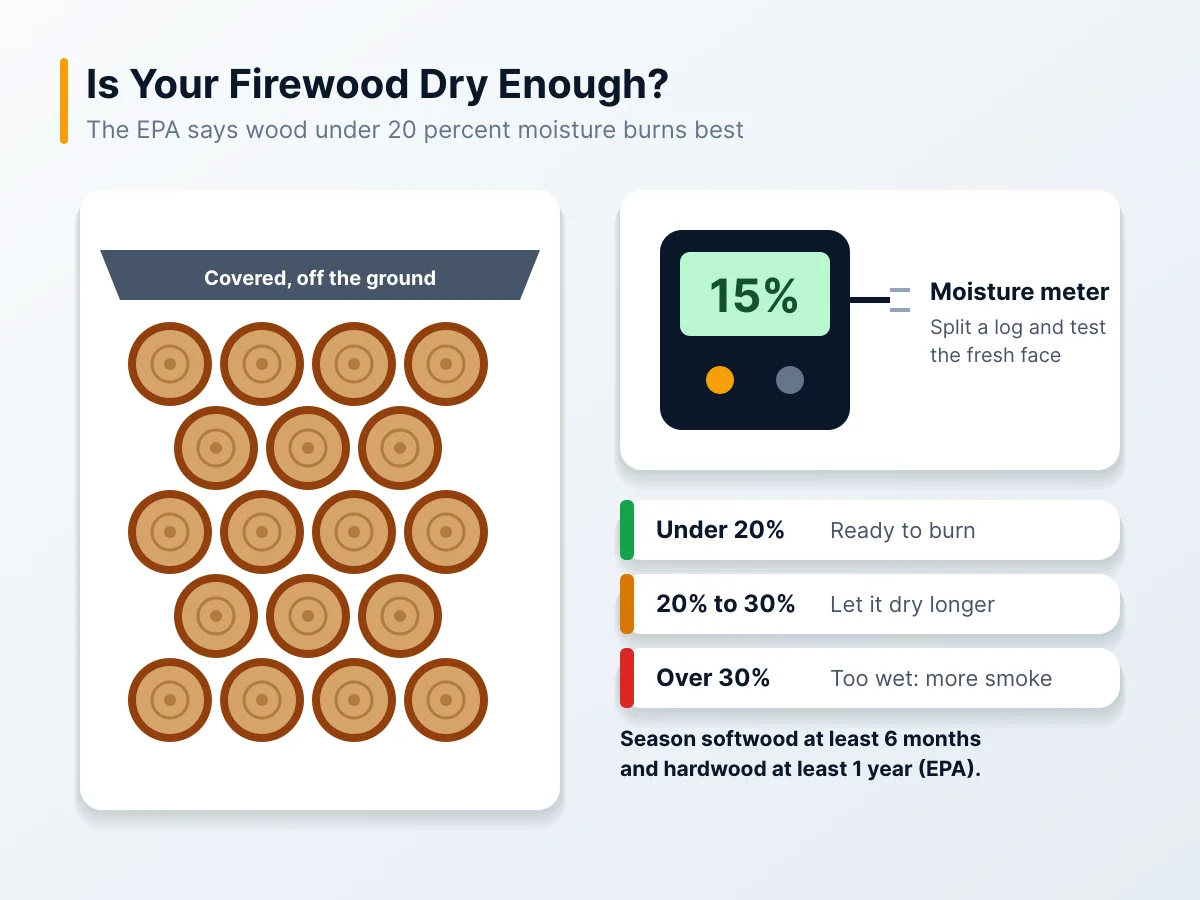
- Season softwood for at least six months and hardwood for at least a year.
- Stack wood off the ground, cover the top and leave the sides open to the air.
- Split a log and test the fresh face, not the bark, with the meter.
- Never burn trash, plastics, cardboard with color print or painted or treated wood.
7. Test Smoke and Carbon Monoxide Alarms
Press the test button on every smoke alarm and carbon monoxide alarm in the house. The CDC recommends a battery powered or battery backup carbon monoxide detector, placed where it will wake you if it goes off. Replace any alarm past the date printed on the back, and change batteries this weekend when the clocks change.
8. Clear the Space and Add a Screen
The U.S. Fire Administration advises using a glass or metal screen in front of the fireplace to keep sparks in the firebox. It also says to keep anything that can burn at least three feet away from a wood stove or fireplace. Move rugs, furniture, holiday decorations and baskets of kindling back from the hearth before the first fire.
9. Set Up a Metal Ash Can
Ashes can stay hot for days. The USFA says to put cooled ashes in a metal container with a tight lid and keep it outside at least ten feet from the house. Never set the can on a wooden deck, in the garage or next to the trash bins.
10. Service Gas Fireplaces and Inserts
Gas fireplaces need care too. The CDC recommends having gas, oil and coal burning appliances serviced by a qualified technician every year. The vent can be blocked by nests or debris, and a gas log set with a weak flame or soot on the glass should be checked before you use it.
Which Tasks Can You Do Yourself?
| Task | Who does it | How long it takes |
|---|---|---|
| Sweep and yearly inspection | A trained sweep | About one to two hours |
| Outside look with binoculars | You | About 10 minutes |
| Damper, firebox and hearth check | You, then your sweep if anything looks wrong | About 15 minutes |
| Firewood moisture test | You | About 10 minutes |
| Smoke and CO alarm test | You | About 10 minutes |
| Screen, clearance and ash can setup | You | About 20 minutes |
| Nest removal after swifts leave | A trained sweep | Done during the sweep |
| Gas fireplace service | A qualified gas technician | About one hour |
Times are rough guides for a typical single fireplace. Homes with more than one flue, or with a wood stove and a fireplace, will take longer.
Which Warning Signs Mean You Should Wait to Light a Fire?
If you notice any of these while working through the list, hold off on your first fire and have a sweep look at the chimney first.
- A strong campfire smell in the room. This often means creosote has mixed with damp air in the flue over the summer.
- Black flakes or pieces of clay tile in the firebox. Flakes point to heavy buildup, and tile pieces point to a cracked liner.
- Water stains on the ceiling or wall next to the chimney. Leaks usually start at the crown, the cap or the flashing.
- Scratching, chirping or a bad smell from the flue. An animal or a nest may be blocking the chimney.
- Smoke that rolled into the room last winter. A blocked flue, a stuck damper or a chimney that is too short for the house can all cause it.
- No record of a sweep in the past year. If you cannot remember the last inspection, it is time for one.
A sweep visit in the fall usually covers cleaning the flue, checking the damper, firebox, crown, cap and flashing, and a written report with photos. If anything needs repair, you get a written estimate before any work starts.
What Should You Watch For in Your Part of the County?
Chimneys across Anne Arundel County face the same basic wear, but the type of home and how close it sits to the water change what tends to go wrong first.
Waterfront Homes in Edgewater, Pasadena and Arnold
Homes on the South River, the Magothy River and the Severn River get more wind driven rain and damp salt air than homes inland. That moisture rusts chimney caps and flashing and breaks down mortar faster. If you live near the water in Edgewater, Pasadena or Arnold, pay extra attention to step 2 and ask your sweep about waterproofing the brick.
Older Brick Chimneys in Severna Park and Arnold
Many homes in Severna Park and Arnold date from the 1970s and 1980s, and their chimneys may now be 40 to 50 years old. At that age, crowns crack, mortar wears out and original clay flue tiles can shift. A camera scan during the yearly inspection is the best way to see the condition of the liner.
Townhouses and Newer Homes in Crofton and Odenton
Many townhouses and newer homes in Crofton and Odenton have factory built fireplaces with metal flues. Follow the maker’s manual for cleaning, and check with your HOA before any work on the outside of the chimney or the cap, since many communities have rules about exterior changes.
Wood Stoves on Larger Lots in Crownsville
Homes on wooded lots in Crownsville are more likely to burn wood as a main heat source, sometimes every day through the winter. Heavy use builds creosote faster, so a stove that runs daily may need a sweep more than once a season. Keep a close eye on wood moisture and the connector pipe.
Condos and Townhomes Near Parole
Our office sits on Bestgate Road, close to many condos and townhomes in Parole. In shared buildings, a chimney or vent may serve more than one unit or be maintained by the association, so check who is responsible before you book.
Frequently Asked Questions
When should I schedule my chimney sweep in Anne Arundel County?
Early fall is best, before the first cold night. That leaves time for any repairs, and sweeps have more open dates before the late fall rush.
Do I need a chimney inspection if I rarely use my fireplace?
Yes. The CDC advises a yearly chimney check, and NFPA 211 calls for a yearly inspection. Nests, leaves and water damage can block or harm a flue even when it sits unused.
How dry should firewood be?
The EPA says firewood should have a moisture content below 20 percent. Season softwood at least six months and hardwood at least a year.
Can I remove a bird nest from my chimney myself?
Not while chimney swifts are using it, because they are protected by federal law. Wait until they leave in early fall, then have a sweep remove the nest and fit a cap.
The Bottom Line
A fall chimney checklist takes one sweep visit and an afternoon of simple checks, and it covers the risks that cause most winter fireplace problems. Book the inspection early, burn dry wood, test your alarms when the clocks change and keep a metal can ready for ashes.
To book your fall sweep and inspection, call Annapolis Chimney Pros at (667) 301-7778 or request a visit online. We serve homes across Anne Arundel County and are open 24/7.
Sources: CDC carbon monoxide poisoning prevention, EPA Burn Wise best wood burning practices, U.S. Fire Administration home heating safety tips, NFPA 211, and Humane World for Animals on chimney swifts and the Migratory Bird Treaty Act.