Old Fireplace Problems in 1970s and 1980s Homes
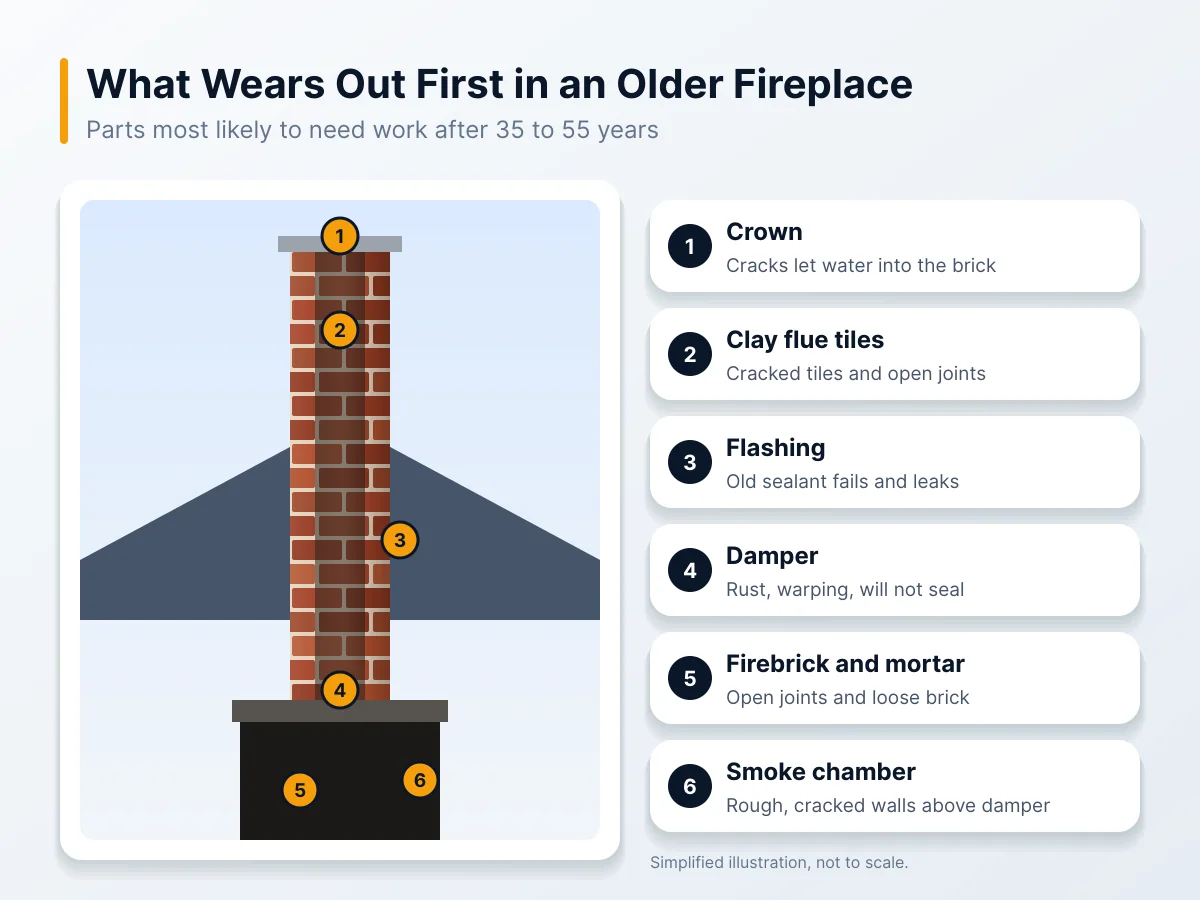
Old fireplace problems in homes built in the 1970s and 1980s usually start in the same few places: the crown on top of the chimney, the clay flue tiles inside it, the flashing at the roof, the damper and the firebrick. These parts have now been through 35 to 55 winters, and many have never been replaced.
This guide walks through what wears out first, the warning signs for each part and what to fix before the next fire. It is written for owners of older homes across Anne Arundel County, especially in Arnold and Severna Park, where homes from this era are common. If you want an expert look, our chimney inspection service in Annapolis includes a camera scan of the flue.
Why Do Fireplaces From This Era Need Extra Attention?
A fireplace built 40 or 50 years ago was designed for the codes, materials and habits of its time. Even a well built one has parts that wear out with heat, water and age, and many owners do not know when it was last inspected.
The age of local homes makes this a real issue. American Community Survey data published by Point2Homes puts the median year built at 1980 in Arnold and 1979 in Severna Park. In Arnold, about 54 percent of homes were built between 1970 and 1989.

If you live in one of these homes, our pages on chimney service in Arnold and Severna Park cover what we see most often in each town.
Which Parts Wear Out First?
1. The Chimney Crown
The crown is the slab that covers the top of a masonry chimney around the flue. Many crowns from this era were built with ordinary mortar instead of a properly formed concrete cap, so they crack as they age. Once water gets through, it soaks the brick below and can reach the flue tiles and the firebox. Hairline cracks can often be sealed. Wide cracks or a crumbling crown usually need a rebuild, which our chimney crown repair page explains.
2. Clay Flue Tiles
Most masonry chimneys from the 1970s and 1980s have clay tile liners. Over decades, the mortar joints between the tiles can open up, and tiles can crack from heat, a chimney fire or water. These problems are hidden inside the chimney, so they only show up on a camera inspection. A cracked liner lets heat and smoke reach the brick and framing around the chimney, and it is one of the main reasons an older chimney fails inspection.
3. Roof Flashing
Flashing is the metal that seals the joint where the chimney meets the roof. Older flashing was often sealed with tar or caulk that dries out and cracks. A leak here can show up as stains on the ceiling or wall next to the chimney, sometimes far from the actual gap. New metal flashing with a proper counter flashing cut into the brick lasts far longer than a fresh coat of tar.
4. The Damper
A damper that has opened and closed for 40 winters can rust, warp or stop sealing. The U.S. Department of Energy notes that repeated heating and cooling can make metal warp or break over time, which lets warm room air escape up the chimney. A damper that will not close is a heat loss problem. One that will not open is a safety problem.
5. Firebrick and Mortar Joints
The firebox takes the direct heat of every fire. Over time the mortar between the firebrick breaks down and falls out, and bricks can crack or come loose. Thin hairline cracks are normal. Open joints and loose brick are not, because they let heat reach the wall behind the fireplace. Our fireplace repair service covers firebox and damper work.
6. The Smoke Chamber
The smoke chamber is the sloped area above the damper that funnels smoke into the flue. In many older fireplaces it was left rough, with stepped brick and no smooth coating. A rough, cracked smoke chamber collects creosote and can hurt the draft. A sweep can smooth and seal it with a heat resistant coating, which makes it easier to clean and helps smoke move up the flue.
Warning Signs by Part
| Part | What you might notice | Why it matters |
|---|---|---|
| Crown | Crumbling bits on the roof, water stains near the chimney | Water damages the brick, flue and firebox |
| Clay flue tiles | Pieces of tile in the firebox, smoke smell in other rooms | Heat and gases can escape into the house structure |
| Flashing | Ceiling or wall stains after rain | Leaks rot wood and stain finishes |
| Damper | Drafts, rust flakes, a handle that sticks | Heat loss or smoke in the room |
| Firebrick | Open joints, loose or broken brick | Heat can reach the wall behind the fireplace |
| Smoke chamber | Heavy creosote above the damper, poor draft | More creosote means more fire risk |
Are Factory Built Fireplaces From This Era Different?
Yes. Factory built fireplaces became more common in the 1970s and 1980s, especially in townhouses and newer subdivisions. They use a metal firebox, refractory panels and a metal flue instead of brick. Parts from that era can be hard to find, and the unit must be repaired with parts the maker approves, because it was tested and listed as a complete system.
Common problems include cracked refractory panels, a rusted chase cover on the roof and a metal flue that has warped or separated. If your home has this kind of fireplace, our guide to townhouse chimney cleaning explains the chase, the cover and what to check.
What About Furnaces and Water Heaters That Share the Chimney?
Many homes from this era vent a gas or oil furnace and a water heater into a flue inside the same chimney as the fireplace, or into a chimney of their own. When the old furnace is replaced with a high efficiency model that vents out the side of the house, the water heater can be left alone in a flue sized for two appliances. The cooler exhaust can condense inside the chimney and wear away the mortar. A liner sized to the water heater fixes this, and our page on chimney liner repair explains how.
What Should You Check Before the Next Fire?
- When was the last inspection? The NFPA 211 standard calls for chimneys, fireplaces and vents to be inspected every year. If you do not know, book one.
- Did you just buy the home? The CSIA calls for a Level 2 inspection when a property is sold, because the new owner rarely knows the chimney’s history.
- Look at the top. From the yard, check for a cap, a cracked crown, loose bricks or white stains on the brick.
- Look inside. With a flashlight, check the firebox joints and the damper.
- Check for water. Look for stains on ceilings, walls and in the attic near the chimney.
- Test your alarms. Keep working smoke and carbon monoxide alarms on every level of the home.
The Chimney Safety Institute of America has more homeowner guidance on inspections and safe fireplace use. For a season by season plan, see our fall chimney checklist.
What Does an Inspection of an Older Fireplace Include?
An inspection of an older fireplace goes beyond a quick look up the flue. A thorough visit usually covers these steps:
- The firebox and hearth. Joints, firebrick, the hearth in front of the opening and the clearance to nearby wood trim.
- The damper and smoke chamber. Whether the damper opens and seals, and how much creosote has built up above it.
- A camera scan of the flue. A small camera runs the full height of the chimney to check each tile joint for cracks, gaps and buildup.
- The outside of the chimney. The crown, cap, brick, mortar and flashing, checked from the roof or with a camera on a pole.
- Spaces next to the chimney. The attic, basement or crawl space where you can see signs of leaks or heat damage.
- A written report with photos. So you can see the problems yourself and plan repairs over time if needed.
How Do You Keep an Older Fireplace Going?
- Sweep it on schedule. The CSIA says a masonry chimney should be swept when sooty buildup reaches 1/8 inch.
- Burn dry wood. Wood with less than 20 percent moisture burns hotter and leaves less creosote.
- Add a cap. A cap with mesh keeps out rain, leaves and animals, which protects every part below it.
- Fix leaks early. Water causes more damage to old chimneys than fire does, so repair the crown and flashing at the first sign of a leak.
- Keep fires modest. Oversized fires put extra stress on old firebrick and flue tiles.
Repair, Upgrade or Replace?
- Repair when the problem is limited to one part, such as a cracked crown, a few open firebox joints or a damper that sticks.
- Upgrade when the fireplace works but wastes heat. A top sealing damper, a cap, or an insert with a new liner can make an old fireplace far more efficient.
- Rebuild or replace when several parts have failed at once, the liner is badly cracked or a factory built unit can no longer get approved parts.
A camera inspection is the best way to decide. It shows the condition of the flue, which is the part you cannot see and the part that most often decides whether a repair or a bigger job is needed.
Frequently Asked Questions
How long does a chimney liner last?
There is no single number. Clay tiles can last for decades, but heat, water and chimney fires can crack them much sooner. A camera inspection shows the real condition.
Is it safe to use a 40 year old fireplace?
It can be, if it has been inspected and the flue, firebox and damper are in good shape. Many older fireplaces just need a sweep and a few repairs. Do not use one that has not been checked in years.
Why does my old fireplace smell in summer?
Creosote in the flue reacts with warm, humid air, and a missing cap or open damper lets the smell into the room. Cleaning, a cap and a damper that seals usually fix it.
What should I ask for when buying an older home with a fireplace?
Ask for a Level 2 chimney inspection with camera images before closing, along with the seller’s records of past sweeps and repairs.
The Bottom Line
Most old fireplace problems in 1970s and 1980s homes come from parts that have simply reached the end of their life: the crown, flue tiles, flashing, damper and firebrick. A yearly inspection with a camera finds them before they turn into leaks, smoke or a chimney fire, and many can be fixed one part at a time.
Call Annapolis Chimney Pros at (667) 301-7778 or book an inspection online. We serve Arnold, Severna Park and the rest of Anne Arundel County, we are open 24/7 and we show you photos before any work starts.
Sources: American Community Survey housing data published by Point2Homes, NFPA 211, Chimney Safety Institute of America inspection levels, U.S. Department of Energy Energy Saver guide, and This Old House on firebrick.