Chimney Camera Inspection: What It Shows and When to Book
A chimney camera inspection uses a small video camera to look at the inside of your flue from bottom to top. It shows cracked flue tiles, open mortar joints, creosote and blockages that a flashlight from the fireplace simply cannot reach, and it gives you photos you can see for yourself.
This guide explains how the camera works, when you need one, what it can and cannot find and how to read the report. A camera scan is part of our Level 2 chimney inspection in Annapolis, and it is the most reliable way to know what shape a chimney is really in.
How Does a Chimney Camera Work?
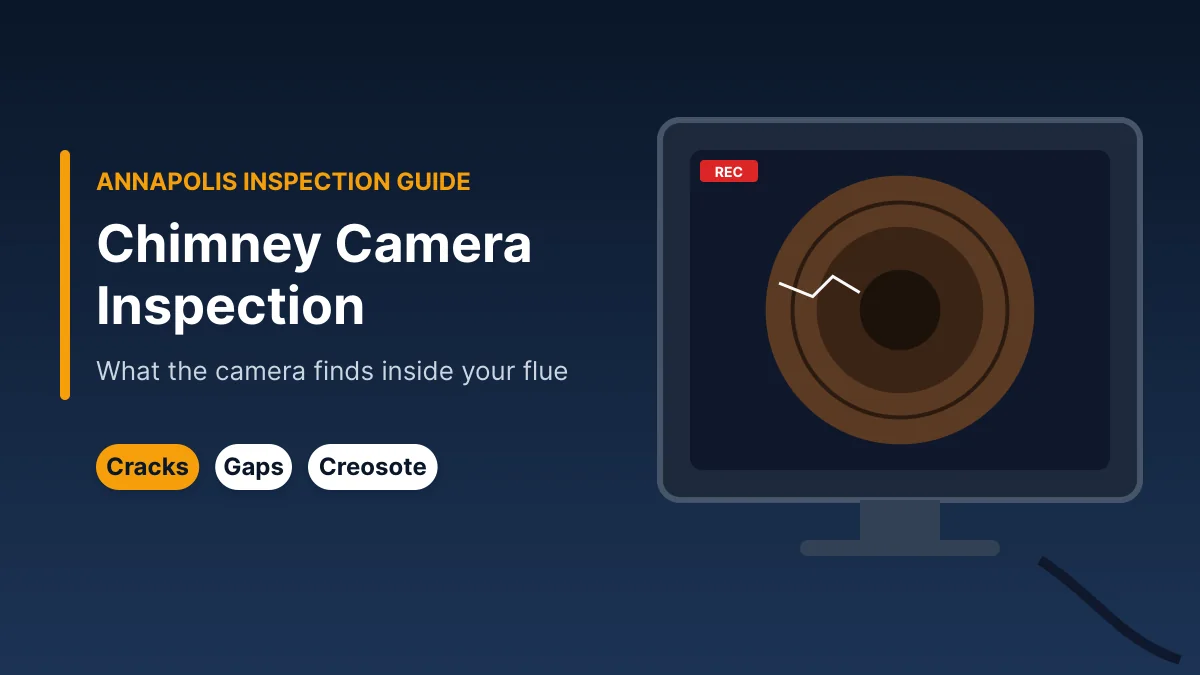
The sweep feeds a small, lighted camera up the flue from the fireplace or down from the roof on flexible rods or a cable. The picture shows live on a monitor, so you can watch it, and the sweep records video or takes still photos of anything that needs attention.
- The camera head is small enough to fit inside a typical residential flue and carries its own light.
- Rods or a cable push the camera along the full height of the chimney, joint by joint.
- A monitor shows the image in real time, and many systems can tilt or rotate the view.
- A recorder saves video and photos for your written report.
Most sweeps clean the flue before the camera goes in. Heavy soot and creosote can hide cracks, so a clean flue gives a clearer picture. The sweep may also scan from the top down when the firebox or smoke chamber makes it hard to reach the flue from below.
When Do You Need a Camera Inspection?
The Chimney Safety Institute of America describes three levels of chimney inspection. It recommends a Level 2 inspection when you add a new heating appliance, change the type of fuel, sell or transfer the property, or after a malfunction or outside event that may have damaged the chimney. CSIA notes that a Level 2 may include a video scan of the inside of the chimney, and in practice the camera is how most sweeps check the flue at this level.
- Buying or selling a home. The new owner rarely knows the chimney’s history. Our guide to chimney inspections during a home sale covers this in detail.
- After a chimney fire. Fire damage usually sits in the middle of the flue, out of sight. See our guide on what to do after a chimney fire.
- After a big storm or a lightning strike. Wind, falling trees and lightning can crack the chimney and the liner.
- Before relining or adding an insert. The camera shows the size and condition of the flue so the new liner fits.
- When something seems wrong. Smoke in other rooms, a strong odor, water leaks or pieces of tile in the firebox all call for a closer look.
- After years of no use. A fireplace that sat unused may have nests, debris or water damage inside.
What Can a Chimney Camera Find?

- Cracked flue tiles. Even thin cracks can let heat and gases reach the brick and framing around the chimney.
- Open or missing mortar joints. Gaps between tiles are one of the most common findings in older chimneys.
- Shifted, offset or missing tiles. A liner that no longer lines up cannot seal the flue.
- Creosote buildup and glaze. The camera shows how thick the buildup is and what stage it has reached.
- Signs of a past chimney fire. Puffy, honeycombed creosote and split tiles point to a fire that may have gone unnoticed.
- Blockages. Nests, leaves, fallen brick and debris that block the flow of smoke.
- Water damage. Stains, spalling and crumbling mortar from water coming in at the top.
- Problems with metal liners. Holes, rust, crushed sections and loose connections.
Seeing the problem yourself matters. A crack described over the phone is easy to doubt, and a big repair quote is easy to question. A photo of the exact tile, with its place in the flue marked, lets you judge the risk, compare quotes and decide what to fix first. It also gives a second sweep something solid to review if you want another opinion.
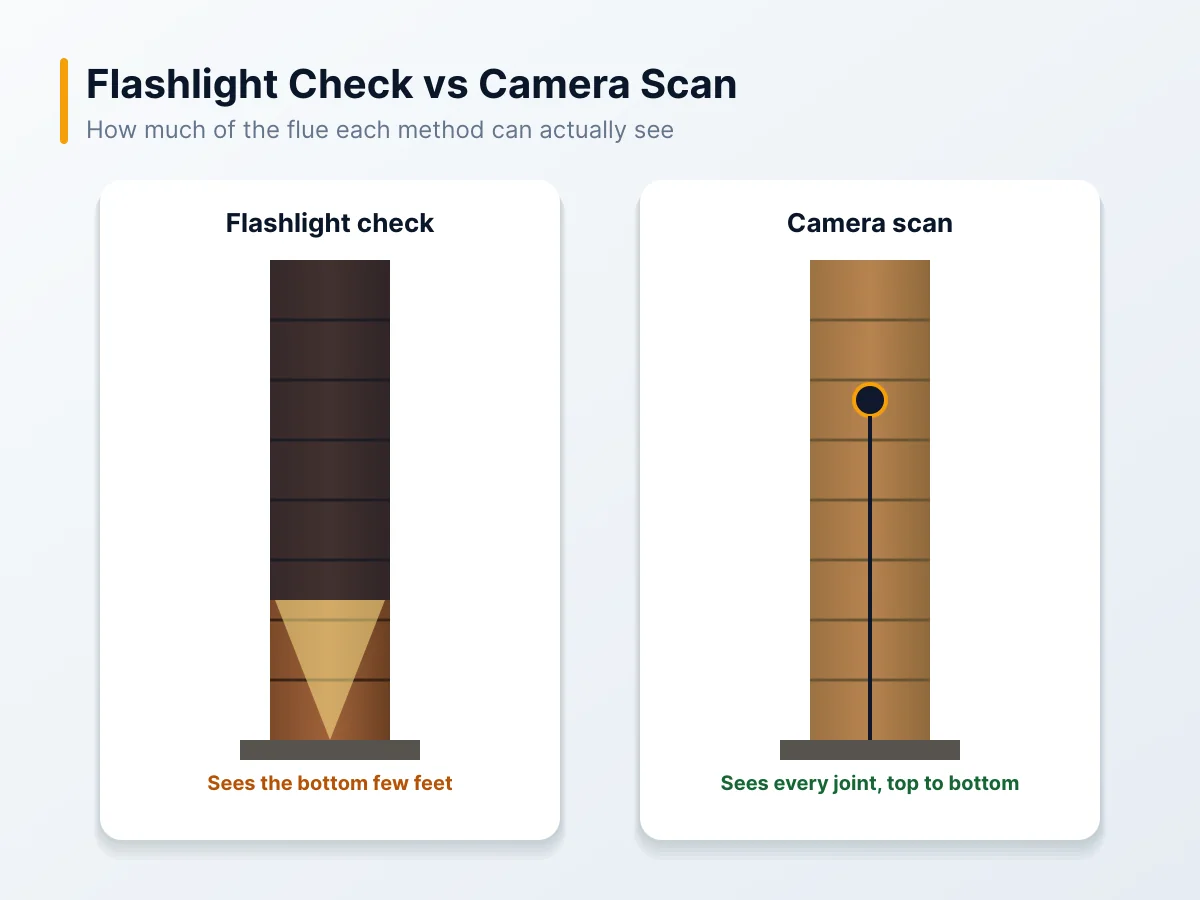
How Is a Camera Scan Different From a Flashlight Check?
| What you get | Flashlight check from the fireplace | Camera scan of the flue |
|---|---|---|
| How far you can see | The damper area and the first few feet | The full height of the flue |
| Cracks between tiles | Only near the bottom | Joint by joint, top to bottom |
| Proof you can see | The sweep’s description | Photos and video in the report |
| Typical use | Yearly check of a chimney with no changes | Home sales, fires, storms, relining and odd symptoms |
| Matching CSIA level | Level 1 | Level 2 |
For a chimney with no changes and no problems, a yearly Level 1 check is often enough. The NFPA 211 standard calls for chimneys, fireplaces and vents to be inspected every year. The camera adds the detail you need when something has changed or a decision depends on what is inside.
What Do Common Findings Mean?
| Finding | What it usually means | Usual next step |
|---|---|---|
| A few open mortar joints | Normal aging of a clay tile liner | Repair the joints or plan a new liner |
| Cracked or broken tiles | The liner no longer contains heat and gases safely | A new stainless steel or cast in place liner |
| Glazed creosote | Smoldering fires or wet wood over time | Special removal, then better burning habits |
| Puffy, honeycombed creosote | A chimney fire has likely happened | Full Level 2 review and insurance photos |
| Water stains and crumbling mortar | Rain is getting in at the top | Cap, crown or flashing repair |
| A nest or debris | Animals or leaves have blocked the flue | Removal, then a cap with mesh sides |
Not every finding means a big repair. A good report separates what needs attention before the next fire from what you can plan for over the next few years.
Do Gas Appliance Flues Need a Camera Too?
Often, yes. Gas furnaces, boilers and water heaters vent into flues that can crack, rust or collect debris just like a fireplace flue. These problems matter because a blocked or broken vent can send carbon monoxide into the home. A camera is especially useful when a new high efficiency furnace has moved to a side wall vent and left the water heater alone in an old masonry flue, where cooler exhaust can condense and wear away the mortar.
If your chimney has more than one flue, ask for each one to be scanned and listed separately in the report.
What Can a Camera Not See?
- Behind the liner. The camera sees the inside surface of the flue, not the brick or framing behind it.
- Inside walls and ceilings. Hidden framing next to the chimney may need a Level 3 inspection, which opens up parts of the structure. That is a bigger job and is only needed when there are real signs of hidden damage.
- Through heavy buildup. Thick soot or glazed creosote can hide cracks until the flue is cleaned.
- Around tight bends. Some flues have offsets that the camera cannot pass easily.
The CSIA says a Level 3 inspection is recommended when a Level 1 or Level 2 inspection suggests a hidden hazard that cannot be checked without access to concealed areas.
What Should Be in Your Camera Inspection Report?
- The address, date and which flues were inspected
- Photos or video stills of each problem, with where it is in the flue
- A plain explanation of what each finding means for safety
- Which problems are urgent and which can be planned for later
- A written estimate for any repair, kept separate from the inspection
Keep the report with your home records. It helps with insurance claims, future repairs and the next time the home is sold. If you ever need a second opinion, the photos let another sweep review the findings without starting over.
How Do You Get Ready for the Visit?
- Let the fireplace cool. Do not burn for at least a day before the visit.
- Clear the area. Move furniture and fragile items away from the hearth.
- List what you have noticed. Smells, leaks, smoke or noises help the sweep know where to look. Photos of water stains or past repairs are useful too.
- Know your appliances. Note which flues serve the fireplace, furnace or water heater.
- Plan to watch. Most sweeps are happy to show you the monitor as the camera goes up.
What Should You Ask Before You Book?
- Will you clean the flue before the camera goes in?
- Will every flue in the chimney be scanned, including the furnace and water heater flues?
- Can I watch the monitor during the scan?
- Will I get photos or video stills in a written report?
- Will any repair estimate be separate from the inspection?
- Do you check the attic, basement and crawl space next to the chimney as part of a Level 2?
Why Does This Matter in Annapolis?
Many brick chimneys in the Historic District, Eastport and Murray Hill are decades old, and some have original clay tiles or no liner at all. Storms off the Chesapeake Bay drive rain into chimneys without caps, and that water slowly breaks down the mortar inside. A camera is often the only way to see that damage before it shows up as a leak or a smoke problem. Homes that changed hands several times may also have flues that were relined, capped off or connected to new appliances over the years, and the camera shows what was actually done.
Frequently Asked Questions
How long does a camera scan take?
It depends on the number of flues and their condition. A single flue is often scanned in well under an hour, and the full visit takes longer when the chimney needs cleaning first.
Do I need a camera inspection every year?
Not usually. A yearly Level 1 check is often enough when nothing has changed. A camera scan is needed for home sales, after a fire or storm, when you change appliances or when there are signs of a problem.
Can I watch the camera inspection?
Yes. Most sweeps show the live picture on a monitor, and you get photos or video in the report.
Is a camera inspection the same as a Level 2 inspection?
Not exactly. A Level 2 inspection also covers the attic, basement and crawl space next to the chimney. The camera scan is the part that checks the inside of the flue.
The Bottom Line
A chimney camera inspection is the clearest way to see inside your flue. Book one when you buy or sell a home, after a fire or storm, before adding a liner or insert, or whenever something seems wrong, and keep the photo report with your home records.
Call Annapolis Chimney Pros at (667) 301-7778 or book a camera inspection online. We are open 24/7, and you can watch the monitor with us during the scan.
Sources: Chimney Safety Institute of America on the three inspection levels, and NFPA 211.