Firebox Repair: When Cracked Firebrick Needs Fixing
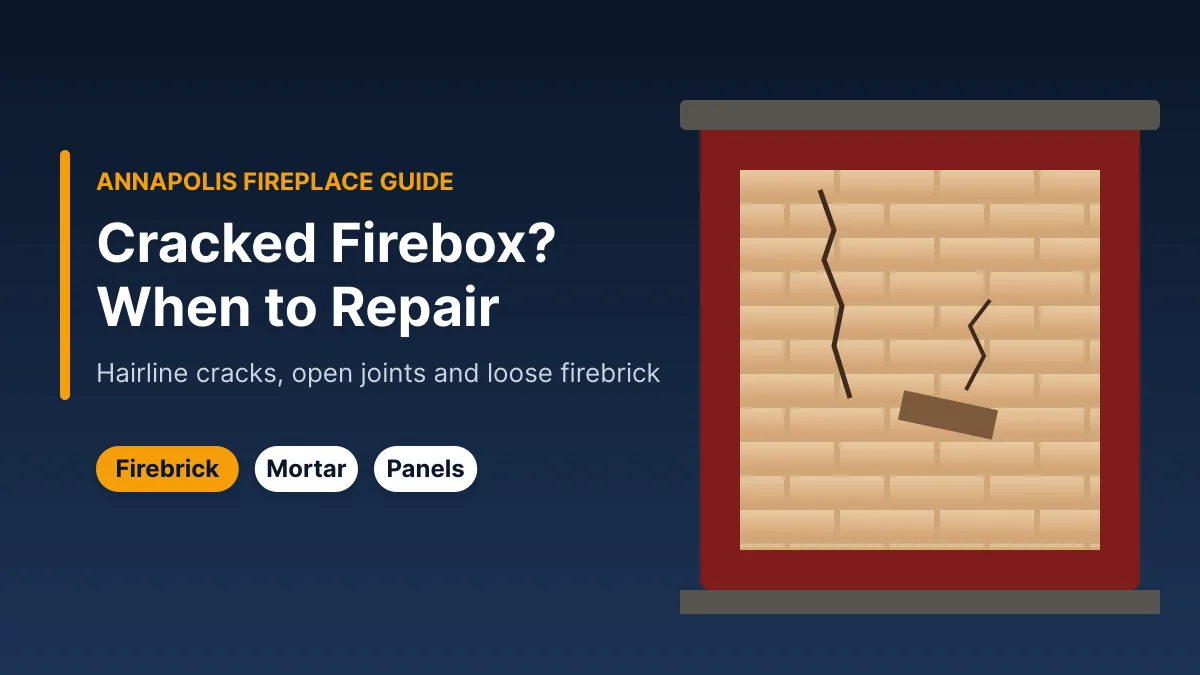
Firebox repair is needed when cracks go deeper than the surface, when mortar joints open up or when firebrick starts to come loose. Thin hairline cracks are normal in a fireplace that gets used, and on their own they are usually not a reason to stop burning.
This guide shows you how to tell the difference, what causes the damage, what each repair involves and when it is time to stop using the fireplace. If you want a trained eye on it, our fireplace repair service in Annapolis can inspect the firebox during a sweep.
What Does the Firebox Do?
The firebox is the part of the fireplace that holds the fire. It protects the brick, framing and wall behind it from the direct heat of the flames.
In a masonry fireplace, the firebox is lined with firebrick, a dense brick made to handle high heat, laid in refractory mortar. The International Residential Code calls for firebrick at least 2 inches thick, laid in medium duty refractory mortar that meets ASTM C199. Factory built fireplaces use molded refractory panels instead of brick. Either way, the lining is what keeps fire heat away from the parts of your home that can burn.
How Serious Is a Crack in the Firebox?

| What you see | What it usually means | What to do |
|---|---|---|
| Thin hairline crack, brick still solid | Normal wear from heating and cooling | Keep an eye on it at each sweep |
| Crack you can fit a coin edge into | The crack has grown through the brick | Have it checked before the next fire |
| Mortar missing from the joints | Heat has broken down the mortar | Repoint with refractory mortar |
| Brick that moves or rocks when pushed | The brick has come loose from its bed | Replace the brick before use |
| Pieces of brick or panel on the floor | The lining is breaking apart | Stop using the fireplace and book a repair |
| You can see the back wall or metal behind | The lining no longer protects the wall | Stop using it until it is rebuilt |
Fireplace makers expect some cracking. A Lennox Hearth owner’s manual says the intense heat of the fire will normally cause hairline cracks in the refractory, and that these cracks do not normally reduce how well it works. The same manual says the refractory should be replaced if large cracks develop.
What Causes Firebox Damage?
- Heat and cooling cycles. Every fire heats the brick and every night it cools again. According to This Old House, intense fire heat can make mortar crack, crumble and fall out, and repeated heating and cooling makes small cracks worse.
- Fires that are too big. Overloading the firebox with wood puts extra heat on the brick and the back wall.
- Water in the chimney. Rain coming down an uncapped flue or through a cracked crown soaks the brick and mortar. Wet masonry that freezes and thaws in winter breaks down faster.
- Wet wood and creosote. Smoky, cool fires leave creosote on the firebox and flue, which can damage brick over time.
- Knocks and bumps. Logs thrown against the back wall and grates pushed into the brick can chip and loosen it.
- Age. Mortar in an old firebox simply wears out, even with careful use.
What Does Fixing a Firebox Involve?
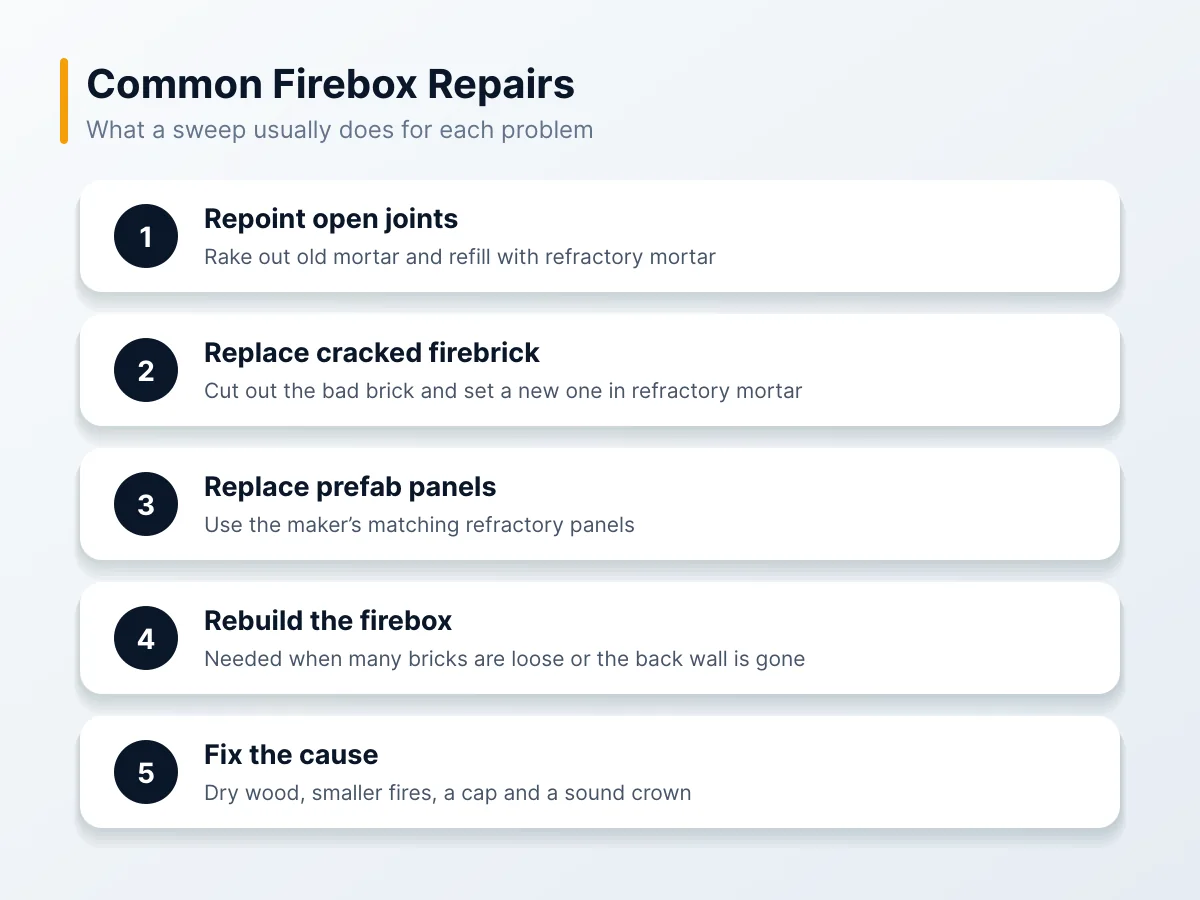
Repointing Open Joints
When the brick is solid but the mortar between it is cracked or missing, the old mortar is raked out and the joints are refilled. This Old House suggests raking out deteriorated mortar to a depth of about 1/2 to 3/4 inch, then filling the joints with a refractory mortar made for high heat. Regular mortar is not designed for fire temperatures and can fail quickly.
Replacing Cracked or Loose Firebrick
A brick that is split through, loose or crumbling is cut out and a new firebrick is set in its place with refractory mortar. This keeps the original layout and leaves the rest of the firebox alone.
Replacing Refractory Panels
In a factory built fireplace, cracked or broken panels are replaced with the matching panels from the fireplace maker. These panels are part of how the unit was tested and listed, so do not swap in loose firebrick or panels from another brand.
Rebuilding the Firebox
When many bricks are loose, the back wall has bowed or pieces have fallen out, patching is no longer enough. The old lining is removed and a new firebrick lining is laid to code. This is a bigger job, but it is often the only safe fix for an old, worn firebox.
Can You Repair a Firebox Yourself?
Small jobs, such as filling a few open joints in a masonry firebox, can be done by a careful homeowner with the right refractory mortar. Wear safety glasses, a dust mask and gloves, work only on a cold firebox and follow the mortar maker’s curing instructions before you light a fire.
Leave these to a pro:
- Loose, broken or missing firebrick
- A bowed or bulging back wall
- Cracked panels in a factory built fireplace
- Any damage where you can see the wall or metal behind the lining
- Damage that keeps coming back, which usually means a water or chimney problem above
Is It Safe to Use a Cracked Firebox?
With only hairline cracks and solid joints, it is usually safe to keep burning. With open joints, loose brick or missing pieces, it is not. Gaps let heat and sparks reach the masonry and wood framing behind the firebox, where a fire can start out of sight.
A damaged firebox often shows up with other problems. A rusted damper sitting right above it is common, and our guide on fireplace damper repair explains those fixes. If the fireplace also sends smoke into the room, read why a fireplace smokes into the room.
How Do You Protect the Firebox After a Repair?
- Let the mortar cure. Follow the product directions before the first fire, and start with a small fire.
- Burn dry wood. Seasoned wood burns hotter and cleaner and leaves less creosote.
- Keep fires a sensible size. Do not pack the firebox to the top.
- Use a grate. Keep logs off the floor and set them down gently instead of throwing them in.
- Keep water out. A good cap and a sound chimney crown stop rain from soaking the firebox from above.
- Check it every year. This Old House recommends inspecting firebrick at least once a year, ideally before the burning season.
What Should Annapolis Homeowners Watch For?
Many older homes in the Historic District, Eastport and Murray Hill still have their original fireboxes, which have been through decades of heat. The damp air off the Chesapeake Bay and our winter freeze and thaw cycles add to the wear, especially when water gets into an uncapped chimney. If your fireplace sat unused for years, have the firebox and flue checked before the first fire of the season.
Frequently Asked Questions
Are hairline cracks in firebrick normal?
Yes. Heat from the fire normally causes thin hairline cracks. They usually do not affect safety as long as the brick is solid and the joints are full. Have them checked during your yearly sweep.
Can I use regular mortar in a fireplace?
No. Regular mortar is not made for fire temperatures and breaks down quickly. A firebox needs refractory mortar, and the residential code calls for medium duty refractory mortar.
How long does it take to fix a firebox?
Repointing a few joints or replacing a few bricks is often done in one visit. A full rebuild takes longer, and the mortar needs time to cure before a full fire.
Why does my firebox keep cracking?
Repeated damage usually points to a cause that has not been fixed, such as water coming down the chimney, wet wood or very large fires.
The Bottom Line
Hairline cracks come with a working fireplace, but open joints, loose bricks and missing pieces are a sign that firebox repair is needed before the next fire. Fix the cause too, whether it is water, wet wood or fires that are too big, so the repair lasts.
Call Annapolis Chimney Pros at (667) 301-7778 or book a firebox check online. We are open 24/7, and we will show you photos of the firebox and give you a written price before any work starts.
Sources: International Residential Code section R1001.5, This Old House guide to firebrick repair, and a Lennox Hearth fireplace owner’s manual.